win-herastrau-win-real-estate
win%20real%20estate
win-gallery-win-alliance
win-gallery-alb
win-brokers-broler-bucuri-de-lux
win-brokers-white
win-tireanu-motorsport-win-alliance%20copy
win-motorport-logo-alb

WIN Alliance - Affinities

A Beautiful City through the Eyes of an Urban Explorer

An interview with Ovidiu Neacșu

An urban explorer, lover of Bucharest and founder of the ‘Bucureștiul Povestit’ platform, Ovidiu Neacșu offers a different way to discover the charm of Romania`s capital during the interwar period and beyond. Experience has taught him that the beauty of a city does not lie solely in neighbourhoods with houses that are aesthetically ‘perfect’. Nor is it limited to new boulevards lined with gleaming glass buildings; rather, it is made up of details and stories that shed light on the transformation and the mark left by each era, along with the people who lived through it.

ovidiu-neacsu-01 ovidiu-neacsu-01

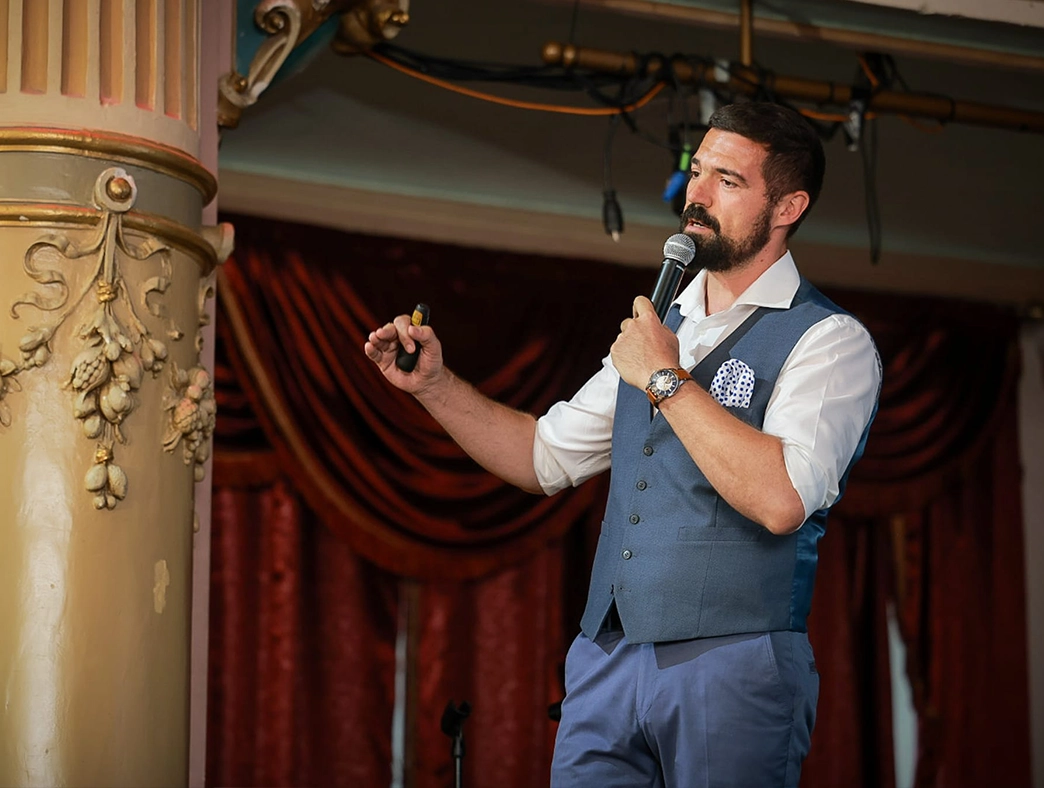
Ovidiu Neacșu, on stage, speaking to the audience about the architecture and history of Bucharest in times past (November 2026)

WIN Alliance: What does a ‘beautiful city’ mean to you? What are its defining elements, and what steps should be taken to ensure that Bucharest becomes an attractive city for both tourists and its permanent residents?

Ovidiu Neacșu: Architecture, community, education, infrastructure and opportunities: these are precisely the defining elements. In architecture (and beyond) there is the principle of ‘form follows function’. Architecture must, first and foremost, serve the comfort and accessibility of those who use it, and only then should we come along and adorn it. I think it’s important to enjoy beauty whether we’re on our way home, leaving the house, or passing by someone else’s home. I am neither an architect nor an urban planner, but, speaking purely from experience, I have always maintained that the life of a city is embodied by its people. They bring it to life; they are the ‘lifeblood’ of a city. They are the people who walk its streets and pavements, and if they do not enjoy it and do not feel comfortable getting about, then the area loses its vitality.

I would say that a city must be accessible not only physically, but also visually and culturally. Mothers should be able to enjoy a stroll with their prams, young people should be able to cycle, and parks should be accessible to everyone – the elderly, people with disabilities, and every resident of the city – without discrimination. We have two or three boulevards in Bucharest where people particularly like to take a stroll: Calea Victoriei, a little bit along Magheru – which is still, in its most part, in a deplorable state – then Regina Elisabeta, and that’s about as far as it goes. One successful neighbourhood and a prime example in this regard is Cotroceni. There are other neighbourhoods where a few initiatives could draw attention to the infrastructure and encourage more people to go for a stroll, such as the Domenii area, which is somewhat similar to Cotroceni, but… there’s still a long way to go.

However, we must bear in mind that Bucharest was remodelled, at least in the 1970s and 1980s, according to the preferences of the authorities at the time, which were by no means in line with the idea of a people-friendly city. On the contrary, they were quite the opposite of this idea. Some of the newly laid-out boulevards and rows of communist-era blocks have obstructed the view of and access to some old neighbourhoods, built at the beginning of the 20th century. A good example would be the Unirii area, but it’s not the only one. If you walk along Unirii Boulevard and venture behind the grandiose blocks of flats, built to surprise and impress visitors, you’ll discover buildings dating from the 1900s, 1920s and 1930s. It’s just that they no longer interact naturally with the spaces around them, because they’re blocked off by these new constructions.

WIN Alliance: You travel a lot – in Romania and around the world – not just as a tourist but as a guide, helping others to discover new and interesting places. Which cities inspire you most, and why?

O.N.: In my view, Barcelona and New York – with its spectacular Manhattan – are two extraordinary cities. New York is a city like no other. I first went there in 2006, as a student, and it was a real revelation the moment I stepped out of the underground for the first time, right in the heart of Manhattan. I discovered a city just as I’d imagined it: tall buildings, beautifully aligned, with a variety of architectural styles. It’s, in fact, a sort of competition amongst the builders: who can create a more beautiful, taller, more elegant and more attractive building.

Because it was a mark of prestige to have your office or headquarters in such a building. At the same time, there are quite a few beautiful, very well-preserved 19th-century buildings, with the odd Neo-Gothic church dotted here and there amongst them, without any of them detracting from each other’s aesthetic appeal.

Barcelona is an extraordinarily beautiful city. You can always tell when a country or a city has been prosperous by looking at the style of most of its buildings. And you can tell whether it is still prosperous by the way these buildings are maintained, renovated or, conversely, left to fall into disrepair. In Barcelona, it is clear that, at the start of the 20th century, the city underwent extraordinary development and has preserved the influences of Modernism very well, right up to the 1920s and 1930s. There is also Art Deco, as well as a certain local stylisation that does not fit neatly into any one category, as it draws its roots from a form of Art Nouveau that is very specific to the area.

Singapore is another interesting example. It is a new city which, in its current form, practically didn’t exist 70 years ago, but which brings together a multitude of styles with great taste and is very people friendly.

ovidiu-neacsu-02 ovidiu-neacsu-02

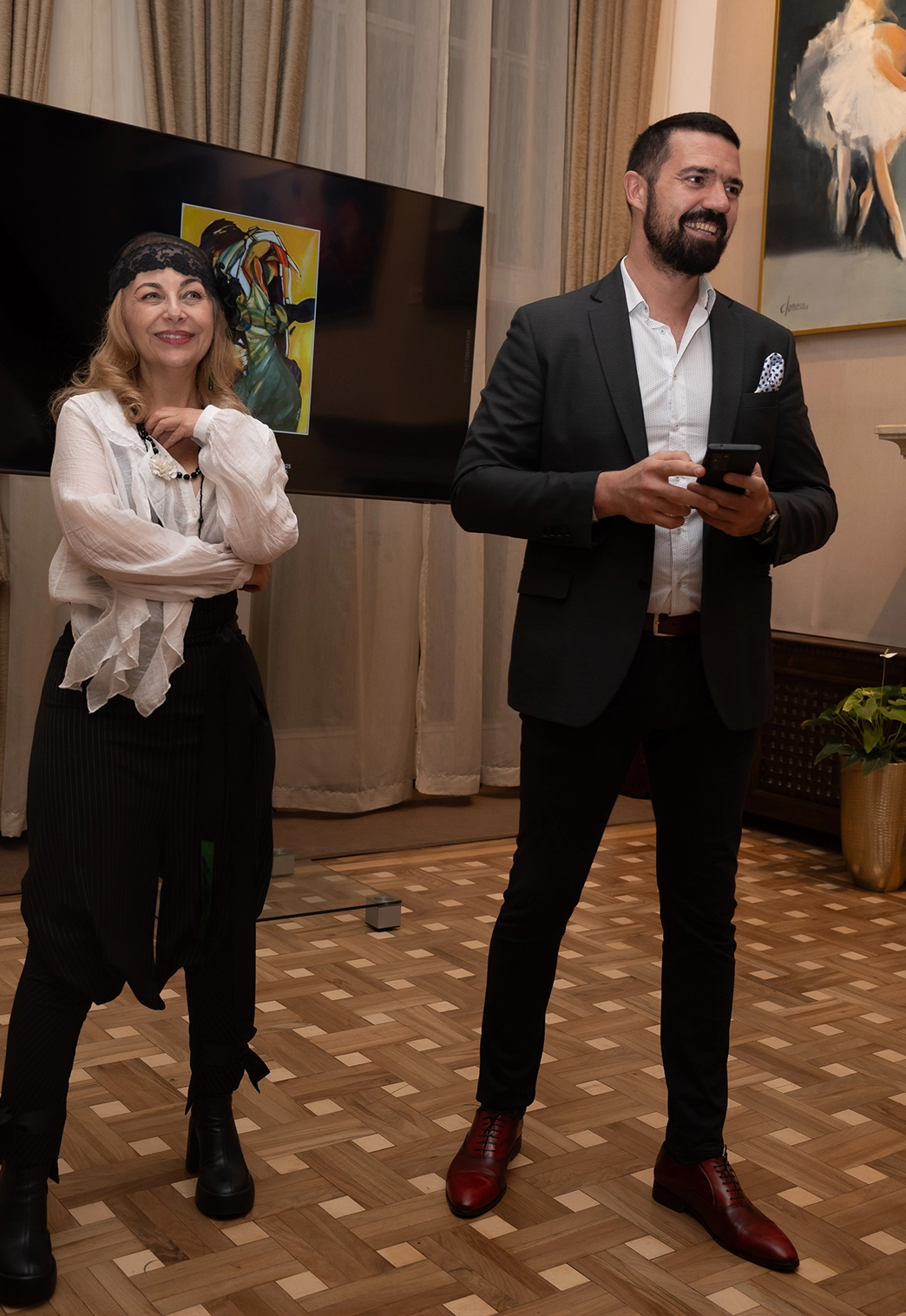
Ovidiu Neacșu alongside Iulia Gorneanu at a private WIN Gallery event (Bucharest, 2026)

WIN Alliance: You’re passionate about history and architectural movements, with Art Deco and Art Nouveau at the top of the list. However, cities grow and develop in step with the education and priorities of the people who live there. How do you see a harmonious blend of old and new in Bucharest?

O.N.: A city is a living entity and must evolve and develop alongside its people. I don’t have a definitive answer regarding the harmonious blend of old and new, but I can say that a concrete example of ‘harmonious coexistence and urban evolution’ that I could give comes from interwar Bucharest itself: Magheru Boulevard, which benefited, to a certain extent (more so than Calea Victoriei or other boulevards), from the radical development of the 1920s and 1930s. Somehow, and partly because it had been a less privileged area up to that point – everyone who mattered, the whole high society, lived on or wanted to build a house or a palace on Calea Victoriei – Magheru had lagged slightly behind in terms of development. We also had Regina Elisabeta Boulevard, where there were already theatres and all sorts of buildings dating back to the late 19th century. On Magheru, by contrast, there wasn’t a very high density of buildings, and properties began to be bought up and replaced. They were small houses, one storey high, perhaps two, not very tall. But if you’re passionate about the recent history of architecture, Art Deco and modernism, Magheru Boulevard should be right at the top of your list. It had quite a few buildings from the late 19th and early 20th centuries, not particularly tall, but it was caught up in the full force of the development boom during the interwar period.

We also have the example of Alexandru Marghiloman’s house, designed by the great architect Petre Antonescu, who also designed the Town Hall, the former Marmorosch Bank (now a hotel) and the Arch of Triumph. Built in 1910, the house was very beautiful and stood on the corner of what is now Arthur Verona Street and Nicolae Bălcescu Boulevard, formerly Magheru. It was demolished in 1929, having stood for just 19 years. The demolition took place to make way for a building that came to symbolise interwar Bucharest and modernism: the Asigurarea Românească (ARO) building, which we know today as ARO-Patria.

WIN Alliance: Do you believe that restoration must necessarily be ‘just as it was’, using traditional techniques and materials, or that, in certain cases, a building may ‘look as good as new’ if this means helping to preserve a symbol?

O.N.: Conventional wisdom holds that restoration, as the term suggests, involves returning a building to its original form using original materials. There are, I believe, specific situations – such as, for example, the Solacolu Inn on Calea Moșilor – where there is little left to restore. In such cases, you partially reconstruct the structure, drawing on what you know or what you believe was there originally. You preserve the memory of the place rather than the place itself and give it a new purpose.

An interesting example, which is worth mentioning and could serve as a model, is the entrance to the National Theatre, with those neoclassical arches, situated just in front of the Novotel hotel. They were completely rebuilt, as they no longer existed there. But it makes you wonder why.

If you cross over to the other side, you’ll find a plaque telling you about the former National Theatre, built in 1852 to a design by the Romanian architect Alexandru Orăscu. He also designed the University of Bucharest building, as well as the Grand Hotel de Boulevard. The National Theatre was severely damaged during the bombings of 1944, and was subsequently bombed again in an attempt to hit the Telephone Palace. Unlike the Romanian Athenaeum, the theatre was never rebuilt.

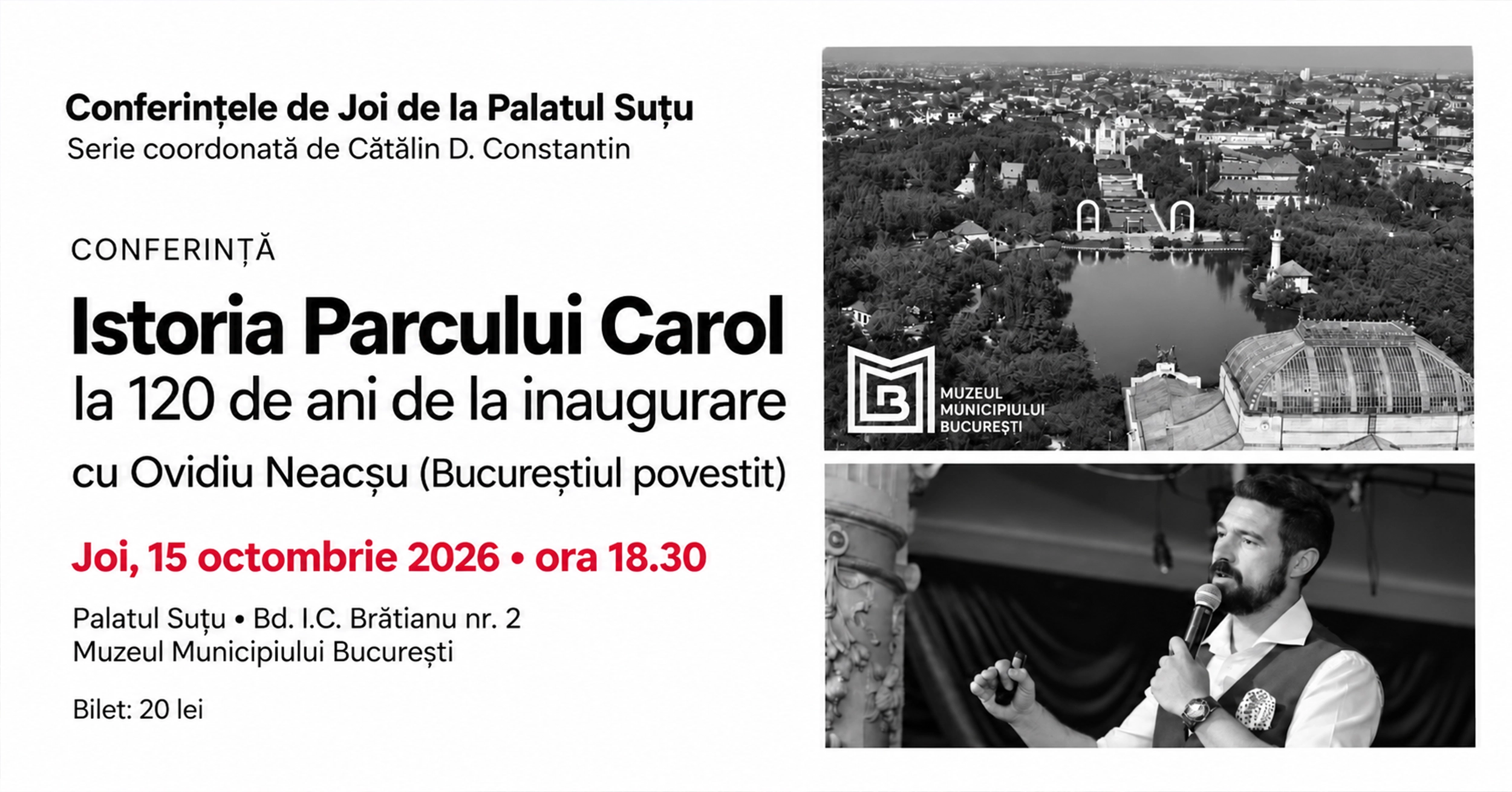
Ovidiu Neacșu giving a lecture on the history of Carol Park at the Suțu Palace (poster)


WIN Alliance: What do the people of Bucharest want when it comes to the city’s aesthetic and functional appearance: the preservation of authenticity, or a new façade so that plaster doesn’t fall on their heads?

O.N.: I’m sorry to say this about Bucharest residents (and Romanians in general) who aspire to aesthetic and functional buildings, but very often they simply want to admire beauty without contributing, without paying, without doing absolutely anything to help achieve it. I see a great many people calling for various beautiful buildings – elegant, monumental headquarters belonging to institutions or companies – to be opened to the public. We all know there are museums where admission costs as much as a coffee and which, despite this, are completely deserted. They can’t even cover their electricity costs.

It is already very clear to me that most of the initiatives that genuinely preserve our heritage come from the private sector, particularly from the tourism and hospitality industries: hotels, restaurants and cafés, but also from the arts sector, through various galleries such as WIN Gallery, which attract people who appreciate both the art on display and the art that surrounds us.

Listed buildings – those that have been renovated and returned to the city’s public life – are maintained and brought to this state through people’s passion and effort, but also through financial resources. We must say this without beating about the bush: renovation and maintenance cost money. So, we must find ways to visit them and contribute somehow, in a whatever small way. As I was saying, we can buy anything, from a coffee or a meal to a night’s accommodation, a work of art on display in a gallery or an item from an antique shop. We also have the recent example of the fashion gallery on Calea Victoriei, in the Știrbei Palace. If you like it too, go and buy something from there. It’s the simplest way you can contribute. You can’t afford to build a building; you can’t afford to live there or make who knows what sort of investments. That’s fine! But help those who’ve done all these things to pay their tradespeople, heating bills, rent or any other expenses involved in maintaining a building you like. Photos posted online don’t help on their own.

ovidiu-neacsu-04.1 ovidiu-neacsu-04.1

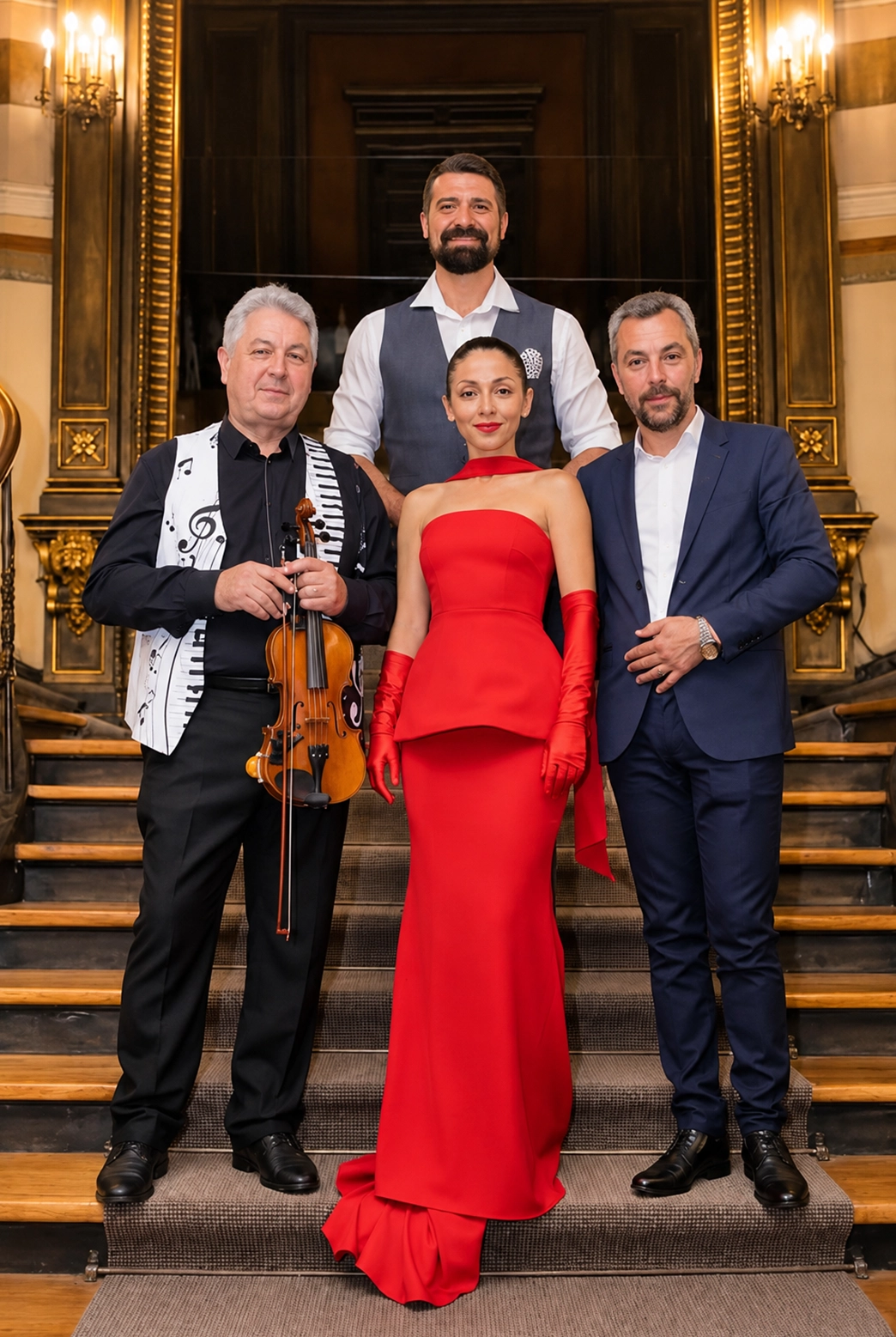
Ovidiu Neacșu, together with "Frumoasă Zaraza"—a project featuring reinterpreted interwar music, launched in early 2026. The project includes artist Marina Ivan (vocals), Alexandru Moraru (piano), and Anton Slavici (violin).

WIN Alliance: You mentioned earlier the interwar period and the advances in construction that made Bucharest a vibrant city. From the point of view of urban architecture, could the interwar period be considered a model for today’s Bucharest?

O.N.: From an architectural perspective, I think we can look to the period beginning in the 1880s as an example. There was already considerable interest in planning, urban design, the maintenance of the sewerage system, street lighting, the paving of streets, the organisation of public transport, and so on.

I would say that the interwar period is an example of best practice, because the authorities were striving to keep pace with the city’s densification. I’ve mentioned this several times: if I recall the figures correctly, the 1912 census put Bucharest’s population at around 360,000. By 1930, the figure had risen to around 740,000 – meaning the population had doubled – and by 1940 it had reached one million. This was a veritable demographic boom, with growth of around 50 per cent in a single decade.

Where were all these people to go? To the outskirts? The problem was that we didn’t yet have the buses, trams and rapid transport systems we have today. People wanted to be as close as possible to where the important things were happening, to the areas where the city’s activity was concentrated. Back then, the solution was to build upwards and increase density. All the pressure fell on the existing streets, public transport, street lighting and the existing waste collection services. I would say that, yes, to a certain extent, the local authorities have managed to keep pace with this development.

I find the growing interest in flats in old buildings – most of them dating from the interwar period – encouraging. However, for the time being, the pace of structural reinforcement is not keeping up with the interest in such properties, and not many people are willing to take on the responsibility of buying and maintaining a flat in a building at risk of earthquake damage. There is, however, a fairly substantial housing stock in this sector which, in the hope that more funds will be found and more will be invested in reinforcing these buildings, could bring a wave of new properties onto an already rather tight property market.

WIN Alliance: What are the key features you would include in an ideal residential development? If you had the freedom to design it from scratch, how would you configure it?

O.N.: First and foremost, I’d prioritise accessibility. I don’t necessarily envisage a residential complex with its own theatre, cinema, art gallery or wine bar, but I’d like to be close to public transport or a high street that takes me to all these places. I’d like enough green space so that I don’t have to travel far to enjoy a park. And, somehow, to have access to more amenities, such as a gym, a spa and, perhaps, a community hall where various small-scale events could be held. Because it’s important not to simply live alone in a building. To forge some connectio

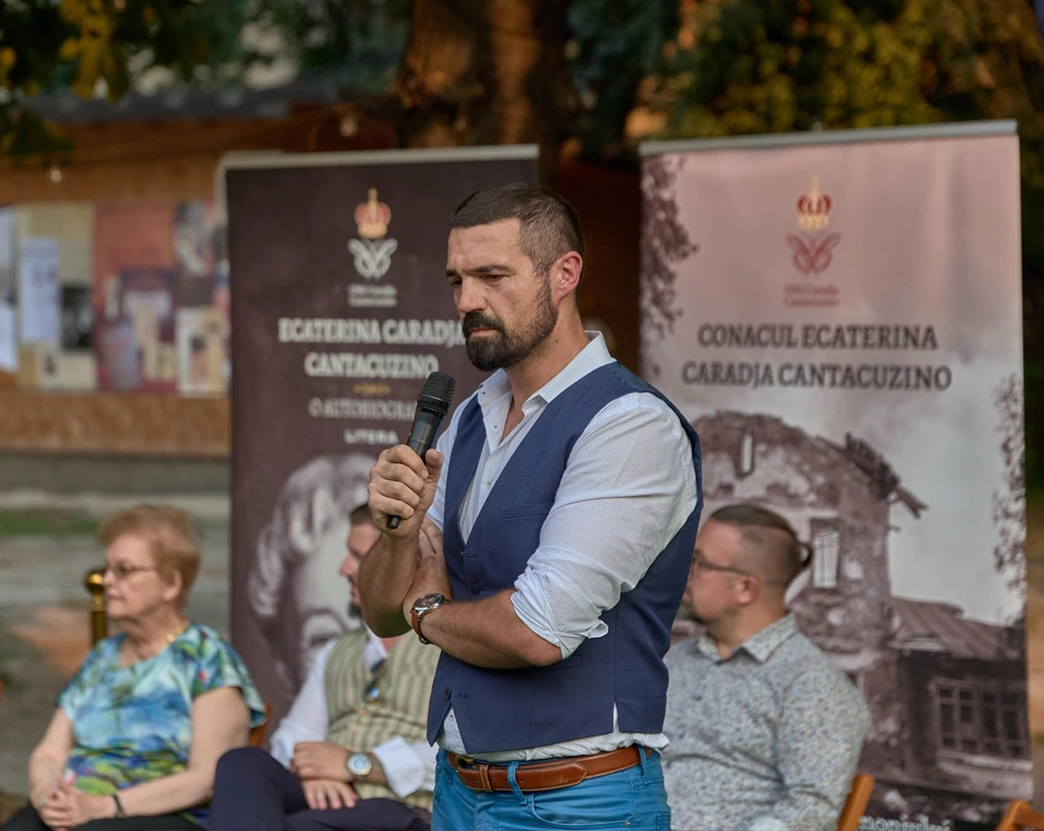
ovidiu-neacsu-05.1 ovidiu-neacsu-05.1

Ovidiu Neacșu at the launch of the book containing the memoirs of Ecaterina Caradja, at the Cantacuzino Palace (September 2026)

WIN Alliance: What are the future plans of urban explorer Ovidiu Neacșu, particularly given your growing interest in Bucharest’s historical periods – such as the interwar era?

O.N.: In the music sphere, this year I launched the ‘Frumoasă Zaraza’ project together with the artist and singer Marina Ivan. We’ve already had more than 25 shows featuring the so-called ‘Interbelic’ music and the music of Maria Tănase. The most successful events took place on 19 and 20 September at the Cantacuzino Palace – the “George Enescu” National Museum, where we held a performance on both Saturday and Sunday, each attracting an audience of over 500 people.  

We want to continue developing the project, bringing authentic interwar Romanian music – with a subtle jazz twist – back to stages in Bucharest and beyond.

Apart from that, I continue to collaborate with various institutions, authorities, museums and private organisations that manage historic buildings, where we organise these wonderful events.

Interview conducted by 
the WIN Alliance team