Seeking light as a mysterious promise of sacred art, Ciprian Istrate explores a variety of spiritual and religious themes, his art becoming a language that transcends aesthetics and invites reflection. The artist’s works are now found in collections around the world, from Europe and the United States to the United Arab Emirates. One of them, “God Is Life,” made its way to the Vatican, where it was presented to Pope Francis as a testament to the fact that art can serve as an innovative means of fostering dialogue between cultures and faiths.
WIN Alliance: Who is the “real” Ciprian Istrate, and how did he come to be the way he is presented to us today? What factors have influenced your artistic development?
Ciprian Istrate: I’d start by saying that everything related to evolution has to do with restricting or liberating the self. Restriction is the act of not allowing yourself to do what you feel, but rather doing what you feel you must. Because of this, we sometimes feel that certain traditions hold us back. They certainly have their place, but in creativity—when we’re talking about creators, artists of any kind—they hold us back, because we are, in a way, beholden to the experiences of others, of those who came before us. And so we cannot fully express ourselves today through the fullness of our feelings and experiences if we cling to traditions at all costs.
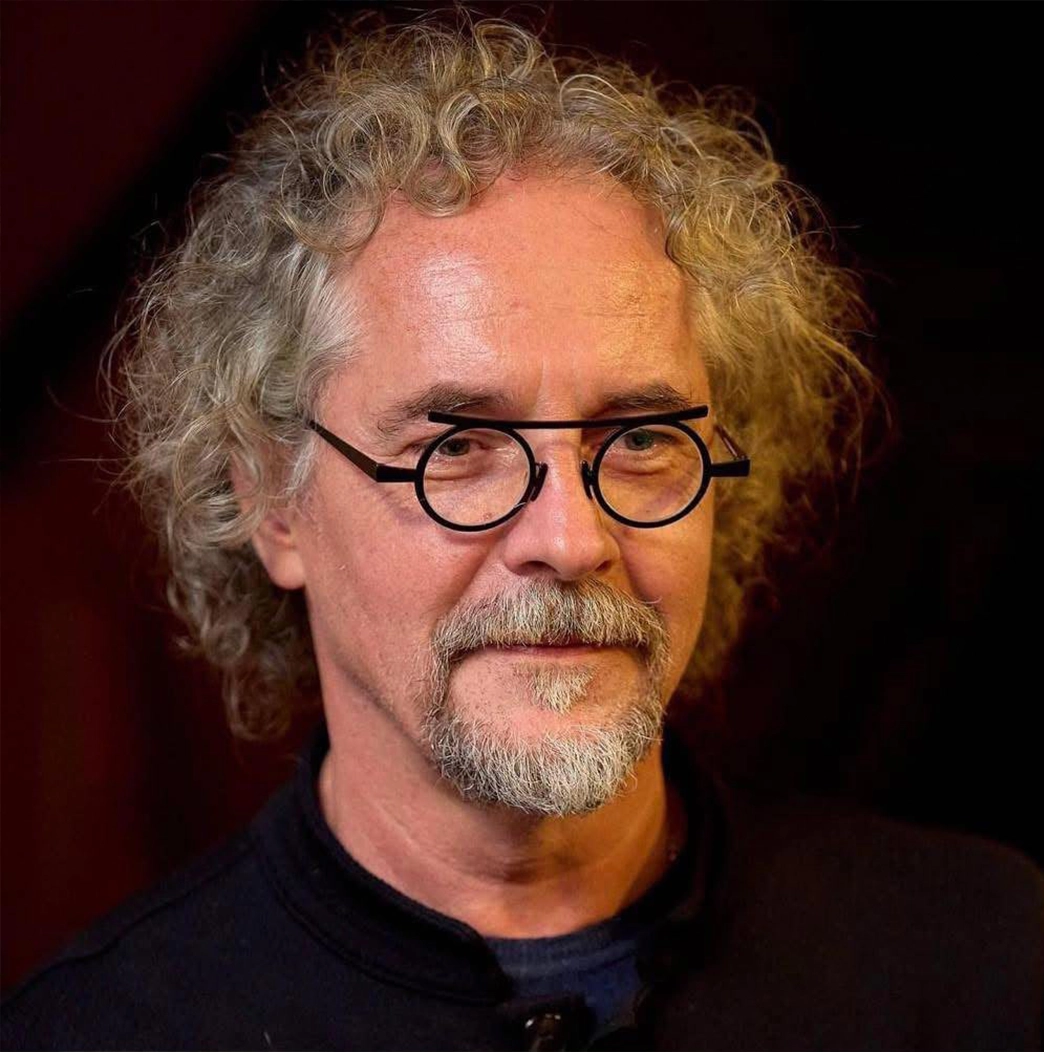
Artist portrait – Ciprian Istrate
WIN Alliance: Can tradition be a form of manipulation on a subconscious level?
C.I.: Certainly, because tradition binds you to rituals, to the experiences of our ancestors, but also to their fears, restrictions, and taboos. For example, our traditions have become intertwined with the teachings of the Holy Church, but in Transylvania we have certain holidays that people in Moldova do not observe. Conversely, in Moldova there are other holidays that people in Wallachia do not observe. Historically speaking, Christianity reached us through the Bulgarian Empire, and the tenets of the dogma shaped the rituals found here into religious traditions.
The holidays have been intertwined with the Cult of the Sun—which we’ve practiced for millennia—and various significant events in our history. We were talking about confinement and how we sense the ways in which these traditions manifest even today, how we perceive them through the roots we have deeply embedded in the fertile soil of this people. And the truth behind it is an uncomfortable one: only by breaking with tradition can we know who we are.
WIN Alliance: Do you have any works inspired by this theme of self-discovery through defiance?
C.I.: I’ve approached this subject with great care; I felt it was a place I could only venture into with great caution. I have an art piece in which a little girl, about three or four years old, holding a tube of lipstick, has smeared herself all over her face, while she continues to smear her mother’s lipstick with her finger. Well, I placed a leaf in the girl’s other hand, and in the background, I painted the Tree of Knowledge. Because when you break a rule, you pluck a leaf from the Tree of Knowledge. In other words, you come to know yourself when you break a rule.
4. WIN Alliance: What was the turning point that led you to pursue spiritual formation at the Faculty of Theology, and to what extent does the painter you are today still draw on the theologian you were back then?
C.I.: My desire to learn more. I was working on churches with various painters and felt that something was missing. I was missing the essence. At that time, His Eminence was Father Daniel, Metropolitan of Moldova (now His Beatitude the Patriarch). Whenever he consecrated a church and we met during the service, he would tell me, “You must study theology! You must become a priest!” And he was right, because you can’t be a church painter without theological knowledge. But even my works today, in essence, draw from Christianity; they are themes that I’ve interpreted and drawn from Christianity and taken further. For example, the series of works featuring the Sibyls has pre-Christian origins, dating back 400–500 years before Christ; these were women who had premonitions and announced His coming, proclaiming that He would come. The Sibyls served as a link between the gods and mortals; they were similar to the Oracle of Delphi—a kind of female oracle—who would enter a trance and begin to speak.
Returning to the question, “To what extent does today’s painter draw on yesterday’s theologian?”—the knowledge that theology has given me cannot be replaced by anything. From theology I moved on to philosophy; I saw extraordinary things and studied intensely. If I hadn’t studied philosophy, I would have concluded that everything originated in Christianity—that all those ideas from which I now draw inspiration would have been Christian—but in fact they are pre-Christian. That’s how I discovered the great philosophers, the Presocratics, and Socrates himself. And in this way, every painting, every work of mine is infused with religious elements—both Christian and pre-Christian—but also with a great deal of philosophy, with a great deal of essence.
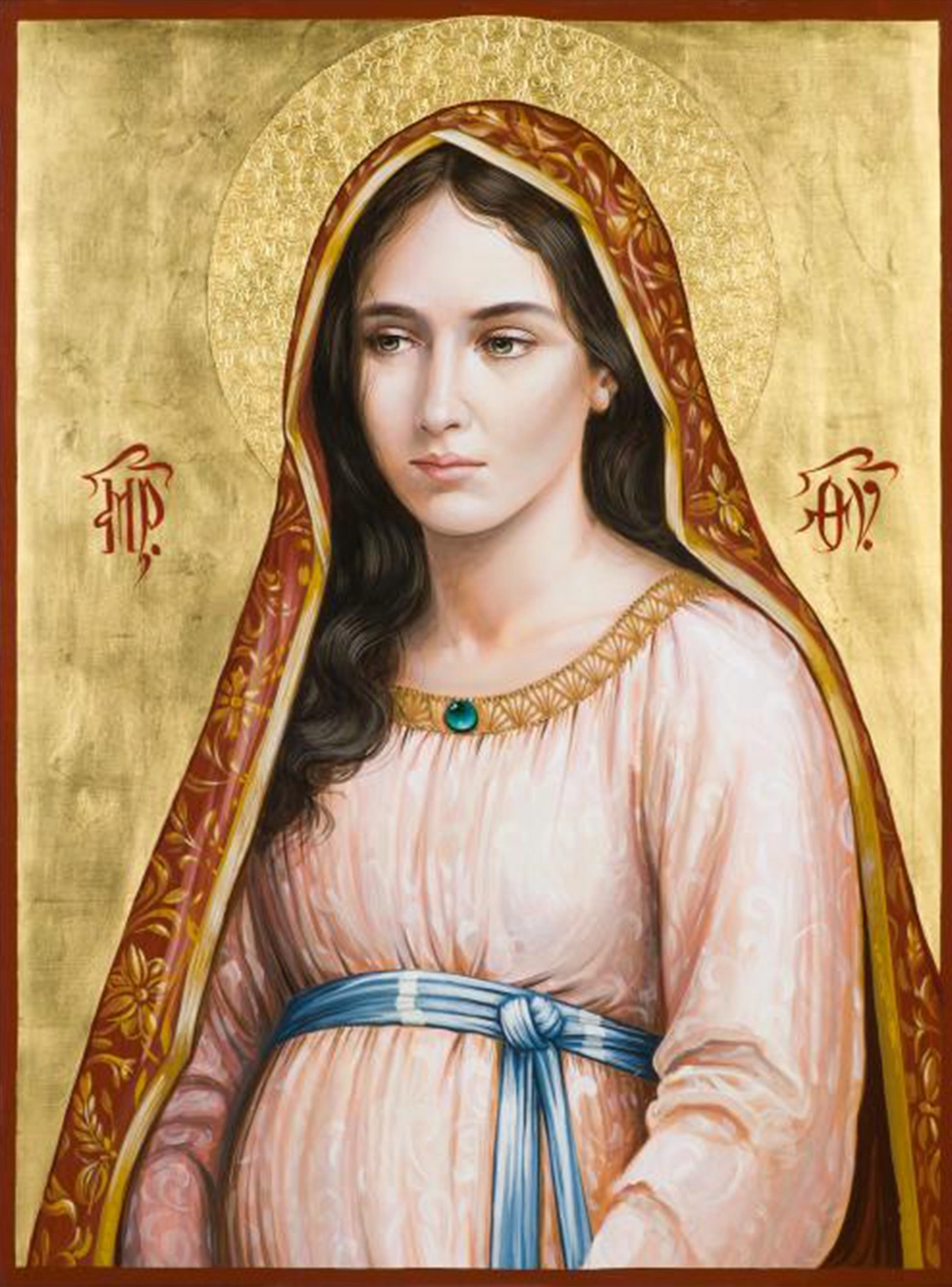
Ciprian Istrate - "Pregnant Virgin Mary",
natural pigments on wood, 2021
WIN Alliance: Is there a “sacred text” that has had a greater impact on you than the others? How does your artistic work relate to the great ideas of the world’s religions?
C.I.: I don’t think any single one is more important than another, but if I were to speak of the greatest impact that one of the ancient scriptures has had on me—and here I’m referring to the Quran, the Torah, the Bible, and the core texts of Hinduism—I think I need to start by telling you how I arrived at the topic for my bachelor’s thesis.
I chose “Adam before Eve’s appearance” as the topic for my B.A. thesis. Obviously, you don’t find many sources, let alone paintings or depictions, of such an “Adam.” And that’s when I realized that the best way to portray him would be as androgynous. Until her appearance, he was essentially made up of his two parts. Of course, I’d already painted a work depicting Adam as a child, out of curiosity and necessity, since we don’t know how he was made and created, or at what stage of his life he came into being. And in the end, through art you can do whatever you want without causing offense. That’s what I wanted—not to cause offense—because I want to maintain a balance in my art, but I also seek support. Especially if a work is predominantly marked by a religious theme, I seek theological and dogmatic support.
Thus, I made this Adam—before Eve’s appearance—androgynous and created four human faces for him, as if he were turning his head in all four directions: one body, four faces, four heads. One was yellow, one black, one white, and one red, representing the four human races. And here I was actually illustrating the balance that I find in all these great religions. In all monotheistic religions, the primordial man appears. We called him Adam, but he goes by many other names; he is the archetype. And through this work of mine, I tried to show that no race is superior to any other race, and no religion is superior to any other religion. However, in the end, I was unable to defend my thesis because it was considered to border on heresy, and, moreover, I could not find any historical or theological sources to support my work. I found something similar only in the writings of Mircea Eliade; otherwise, I had to conduct my own research. Nevertheless, I received a scholarship from the Vatican for this work and from the Lutheran Church to pursue my doctorate.
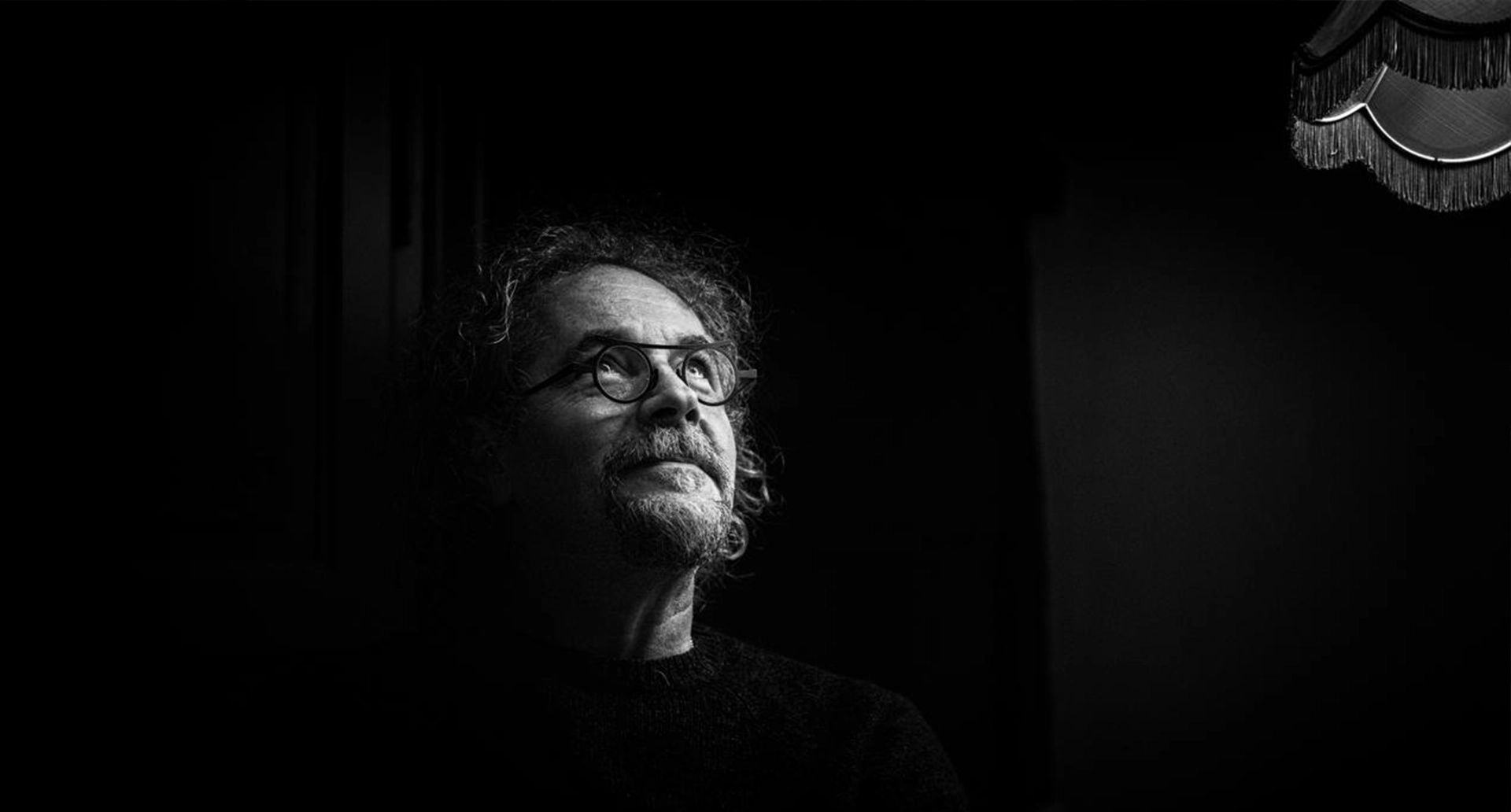
Portrait of an artist – Ciprian Istrate in the quiet of the penumbra
WIN Alliance: How much does being alone in the silence of the studio help you, and how do you end up crafting the fiction that brings your imagined scenes to life?
C.I.: When I first started out, working on the walls and ceilings of churches, I would just listen to music or the news on the radio—that was pretty much all we could do. But most of the time, I spent hours alone, working at night, sometimes until three in the morning. Well, during that time, some profound, impactful conversations took place between me and God; I came to know myself better and to understand Him better. At first, as an apprentice, I worked with stencils, trying to learn as much as possible and strictly adhere to the canons. Later, I noticed that some canons make the work easier: first you draw on paper, punch holes, and then apply a kind of charcoal wrapped in cloth. By dotting with confident strokes, the drawing—which you were merely outlining—remained on the wall.
While at first it was difficult to draw, to conceive and “transfer” the sketch from paper to the wall—having to stay tense the whole time to make sure it turned out right, having to calculate and analyze—I couldn’t do everything by eye—by the end of my work in religious art, things had already changed radically. I had come to draw with extraordinary ease. I draw with both hands, and everything seemed to be changing—it was getting easier and easier, and everything turned out right the first time. It was like a song, as if I were a conductor caressing the wall. So I can say that those hours of intimacy in the quiet of the church, during which I had conversations with God, helped me reach artistic perfection.
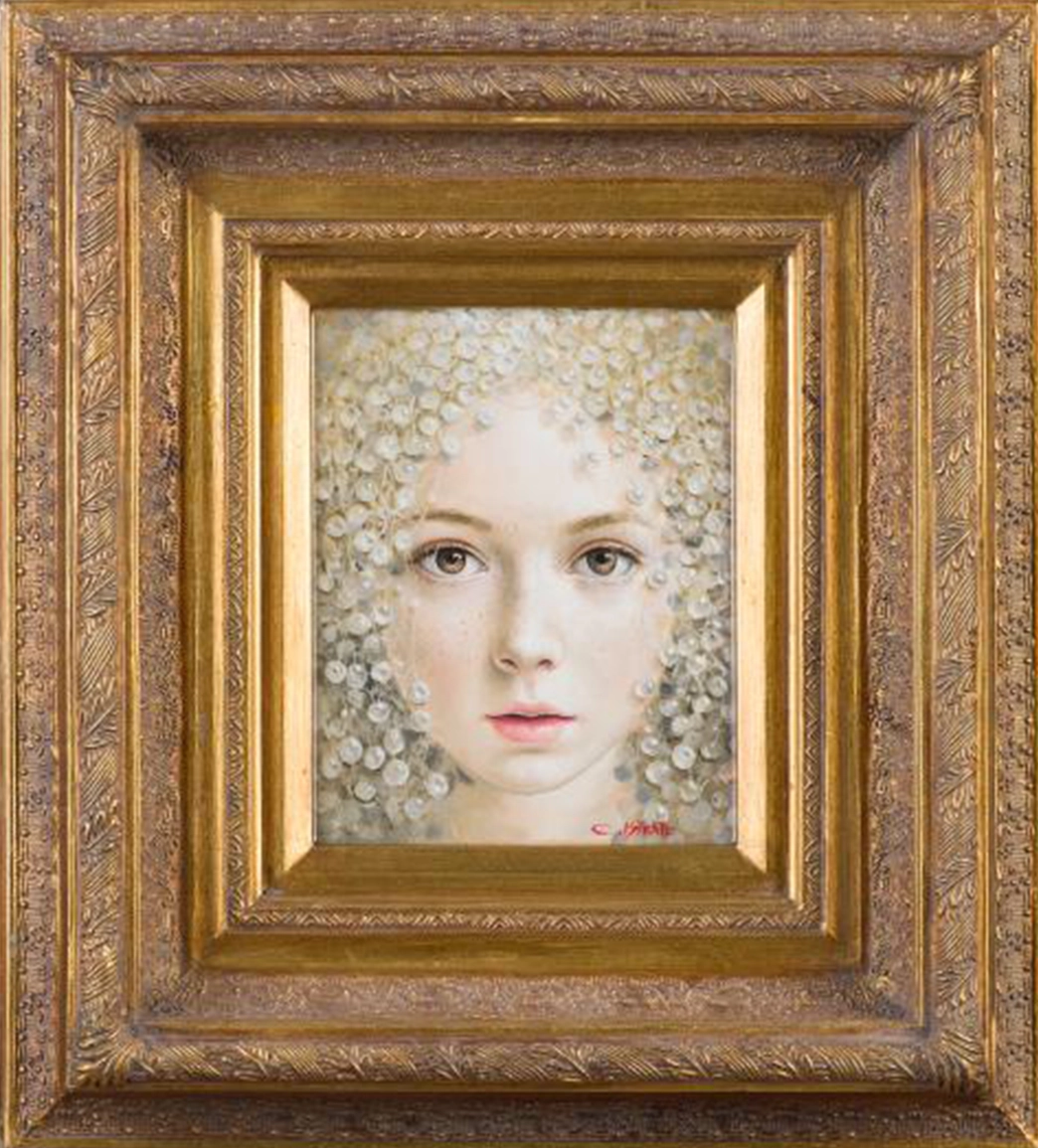
Ciprian Istrate - "Sibilla Agripina (Cimmerian)", Mixed media, 2026
WIN Alliance: When you moved beyond the boundaries of religious painting and began to explore an artistic universe free of thematic constraints, did you also take on a new identity? How would you describe today the feelings and sense of liberation that came with this new role?
C.I.: I don’t know if I can say “new identity” … As an experience, I don’t feel like it was a hard or difficult transition. Right now, things in my life are unfolding at a certain pace and with a certain vibe—if I may put it that way—that’s on a whole new level. Everything is more intense, faster, and paradoxically, people—or at least some of the people I know, artists—are starting to step a little outside the traditional realm of religion and express themselves freely. As for me, I can say that I now live differently—I live freely. And when you live in freedom, you radiate and are in tune with what you think. And ultimately, what does it mean to live freely? Can you live freely without breaking rules? Usually, we think of other people’s rules, but freedom requires us to break with tradition. What do I mean by that? You can live freely without causing trouble, simply by accepting everything as it comes. We encounter people with different outlooks on life along our path. Don’t try to change them—you won’t be able to, and the result will likely be frustration building up inside you. People who have a sort of “cage” of thought in which they feel comfortable are the ones you can’t get upset with, but whom you also can’t change. Let them go their own way; they have their own lessons to learn about freedom. And yes, when you walk with your head held high, things will resonate with a different energy, and you’ll have more confidence in yourself. That, in fact, is the essence of it all.
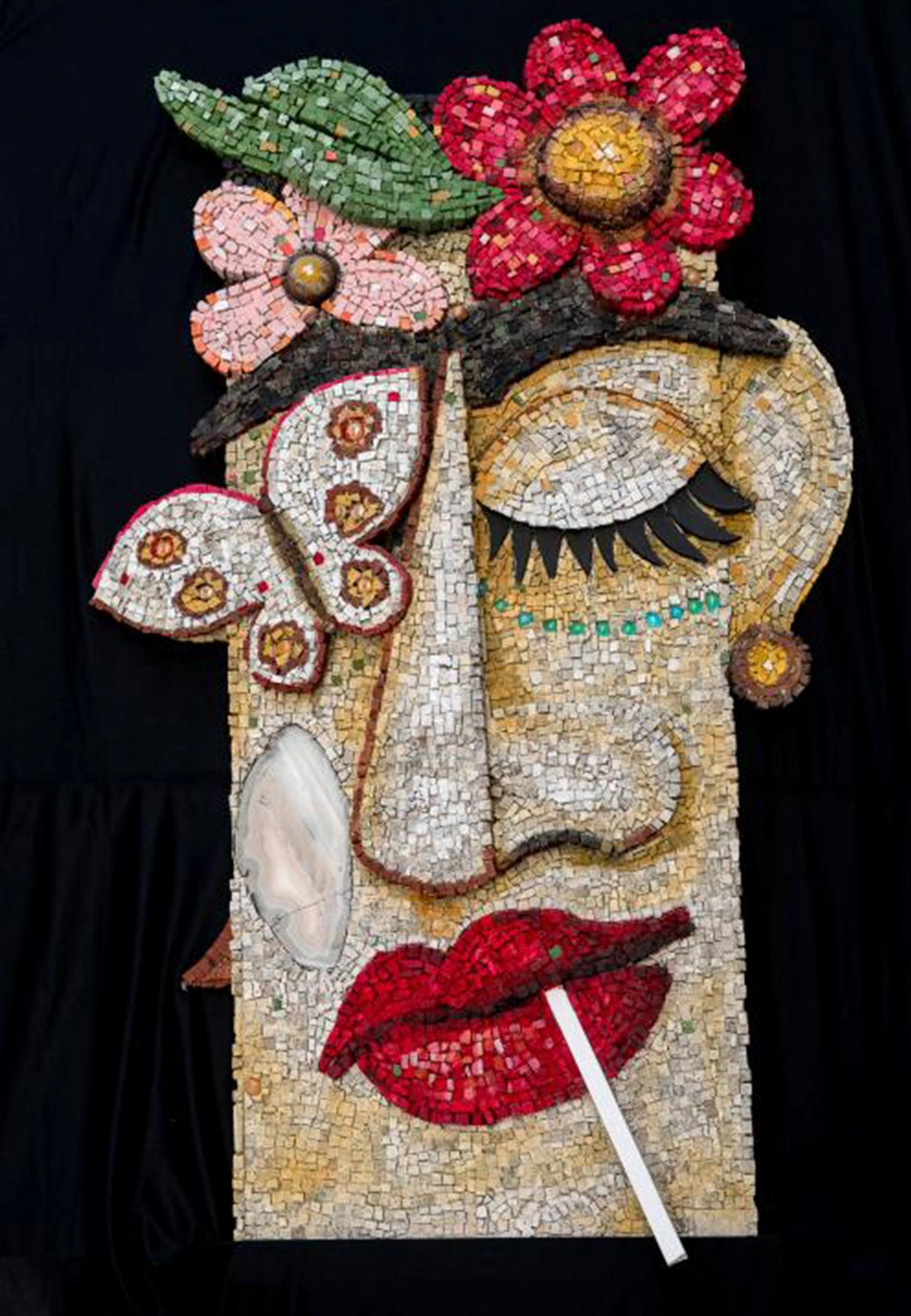
Ciprian Istrate - "Frida", mosaic, 2024
Interview by Ioana-Raluca Zamfir,
Visual artist and PhD. in cinema and mass-media