In the architecture of major residential developments, excellence is measured not only by design and finishes but also by the invisible intelligence of the supporting structure. Bogdan Radu is one of the professionals who transform technical requirements into solid foundations for sustainable projects. With over a decade of experience in design and specialized consultancy, Bogdan Radu played a pivotal role in the development of the WIN Herăstrău complex by configuring structural systems designed to meet the highest standards of resilience and performance.
However, his involvement extends beyond the scope of any single project, reflecting a broader vision regarding professional responsibility and the training of the next generation of specialists. Over the course of 2023 and 2024, Bogdan Radu was among the initiators of an interdisciplinary internship pilot program, alongside WIN Alliance, SBR Soletanche Bachy, and MetriK. Together, they championed an initiative vital to the future of the construction industry: bridging the gap between academic knowledge and the realities of engineering practice.
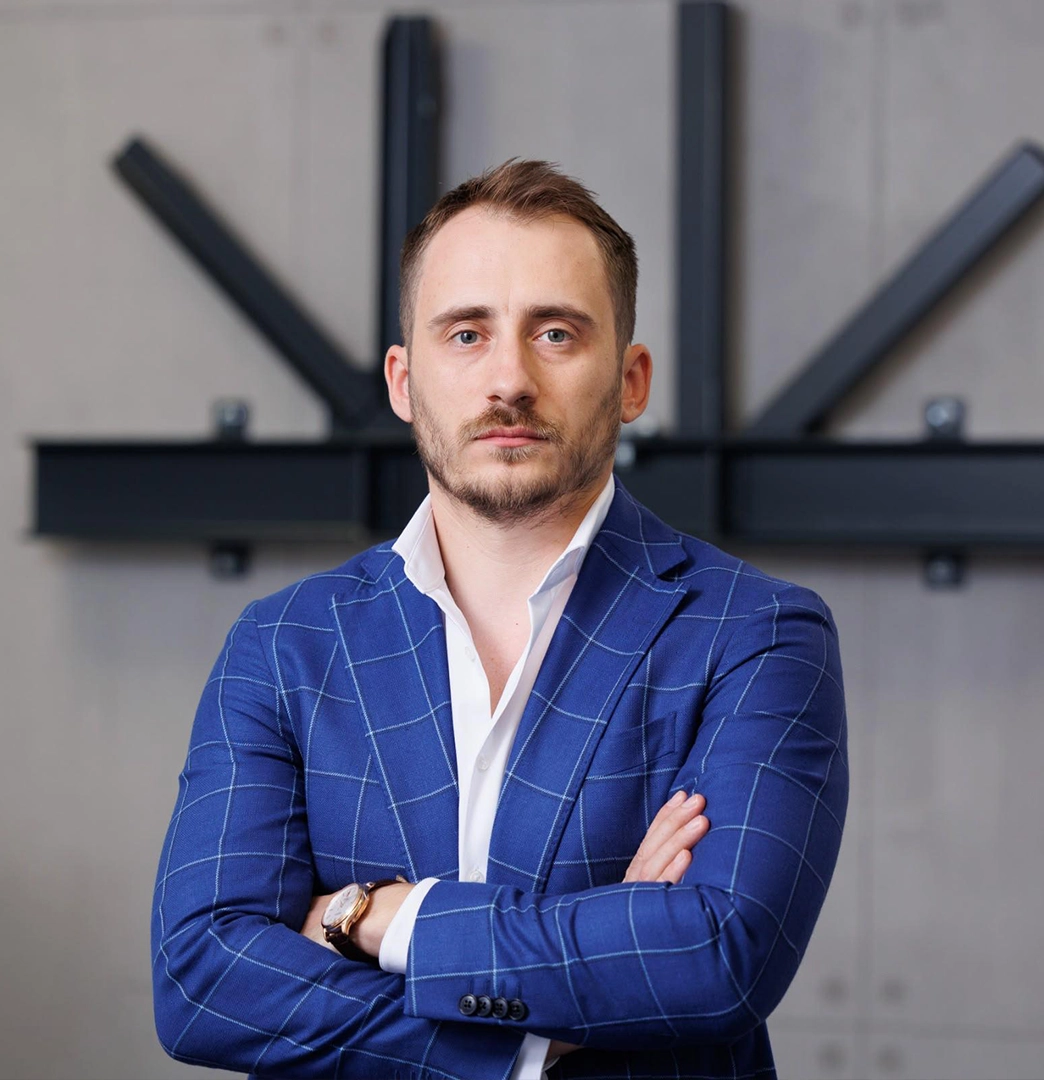
Engineer Bogdan Radu, founder of PCE – Professional Consulting Engineers
WIN Alliance: When you look – from the perspective of a structural engineer – at a city such as Bucharest, situated in an area with significant seismic risk, what are the fundamental principles that should not be overlooked in its urban development?
Bogdan Radu: I originally trained as an urban planner but later specialised in structural engineering. I can say at this point that Bucharest is both a gem and a disaster. It is a gem because, in terms of its built environment, it offers a ‘mosaic’ that keeps you constantly engaged; it never lets you get bored. If we take a stroll through Bucharest’s famous neighbourhoods – Cotroceni, Armenesc, and so on – we can visually reconstruct fragments of history; not just of the buildings themselves but of the tastes and aesthetics that have shaped this city over time. The same is true in regards to the newer buildings; one can ‘read’ influences, aspirations and adaptations to local conditions. But at the same time, this is also the problem, especially when it comes to elements that aren’t so easily visible – the parts that actually keep the structures ‘standing’. There is no greater catastrophe waiting to happen than the one that will occur in this city. If what happened in Venezuela (editor’s note: the earthquake of 24 June 2026) were to happen here tomorrow, I must admit with bitterness that I would have a great deal of work to do afterwards. But first I’ll have to clear up the mess, and only then can I start rebuilding.
When it comes to earthquake safety, all projects must be safe from the outset and in every respect. In other countries, this is standard practice, whereas here we lack a sufficiently well-established framework to carry out a thorough check.
For example, in the field of fire safety, following the ‘Colectiv’ tragedy, it was not just the private sector that continued to deal with fire insurance and safety; the state also began to issue approvals. And now, the fire service comes and inspects your project – not just what’s on paper, but also what’s actually on site – and, on top of that, they take part in the testing! If you install an active fire-extinguishing system, a fire officer will come to ensure it works, whereas in the field of structural engineering, this isn’t the case. There’s the designer you’ve chosen, and perhaps an inspector who may or may not do their job properly. However, if someone else comes along offering a cheaper, but less safe solution, there’s no monitoring system in place to mandate a second check.
At the moment, together with my team, we are reinforcing the Ambassador Hotel on Magheru Boulevard, which, following the fairly severe storm that took us by surprise three days ago (editor’s note: June 30th 2026), suffered damage to its roof. In other words, the old roof was blown off and was on the verge of being swept away, ‘landing’ on the boulevard. We spent the whole day with the emergency teams taking down the wooden roof structure from a height of fifty metres, whilst the boulevard was completely closed.
If that happened because of a storm, you could imagine that, following an earthquake, the said boulevard would be a heap of rubble. This isn’t an alarmist thought but a realistic one, based on a predictable situation. Precisely because we know this, we have the chance to change things, to put in place the necessary procedures and frameworks to ensure we don’t end up there. Prevention isn’t something we’re particularly good at. Or perhaps it has only just begun, in the last few years, and it`s still in its ‘infancy’.
WIN Alliance: Speaking of that extreme and unusual storm for our country at the end of June, what sustainable solutions do you think will become essential for urban development over the coming decades against the backdrop of climate change?
B.R.: This is a very difficult question, because whenever global warming or climate change is discussed, I have a major ‘flaw’: I understand figures. And every time we’re asked to reduce a building’s carbon footprint, I can hardly contain my laughter. Because one of the biggest energy consumers on this planet, one of the biggest producers and ‘emitters’ of carbon into the atmosphere, is the building materials industry. Historically speaking, and even today, you cannot produce bricks without burning large quantities of hydrocarbons and gas. You cannot make concrete without firing limestone at 1,450 degrees. You cannot make steel without melting it at 1,500 degrees. Of course, we are talking about new materials, innovation and revolutionary technologies, but these remain empty words unless they are priority objectives, constantly pursued by everyone from those in education to the homebuyer. And ‘pursuing’ these goals doesn’t just mean having a nice idea and getting upset when things don’t work out but investing a great deal of time and money from every level of society. It’s not enough to be educated; we must be involved. All of us.
Contrary to intuition, we should build structures that are as sustainable as possible, so that we are not forced to demolish them every 25 years, or so that we have the opportunity to keep them for 100 years and use them safely. Because only then will our ‘footprint’ on the world become smaller. And here lies a difficult compromise: how do I minimise my initial footprint as much as possible, and how do I minimise my footprint 100 years down the line? What do I want? A quick fix or a long-term solution? We cannot judge a building simply on the basis that it is still standing; rather, we must judge it by its usefulness to society and to those who live in it.
A 50-year-old building is no longer undesirable simply because it risks collapsing in an earthquake, as the risk isn’t actually that high for many buildings with fewer than three or four storeys. But the facilities are no longer up to standard; the lighting, thermal insulation and overall comfort – none of these meet current standards. Added to this is the fact that they lack lifts and no longer have proper waterproofing. So, the fact that a building is still ‘standing firm’ is not the only consideration; the obstacle to its long-term use is the very fact that it no longer meets today’s needs.
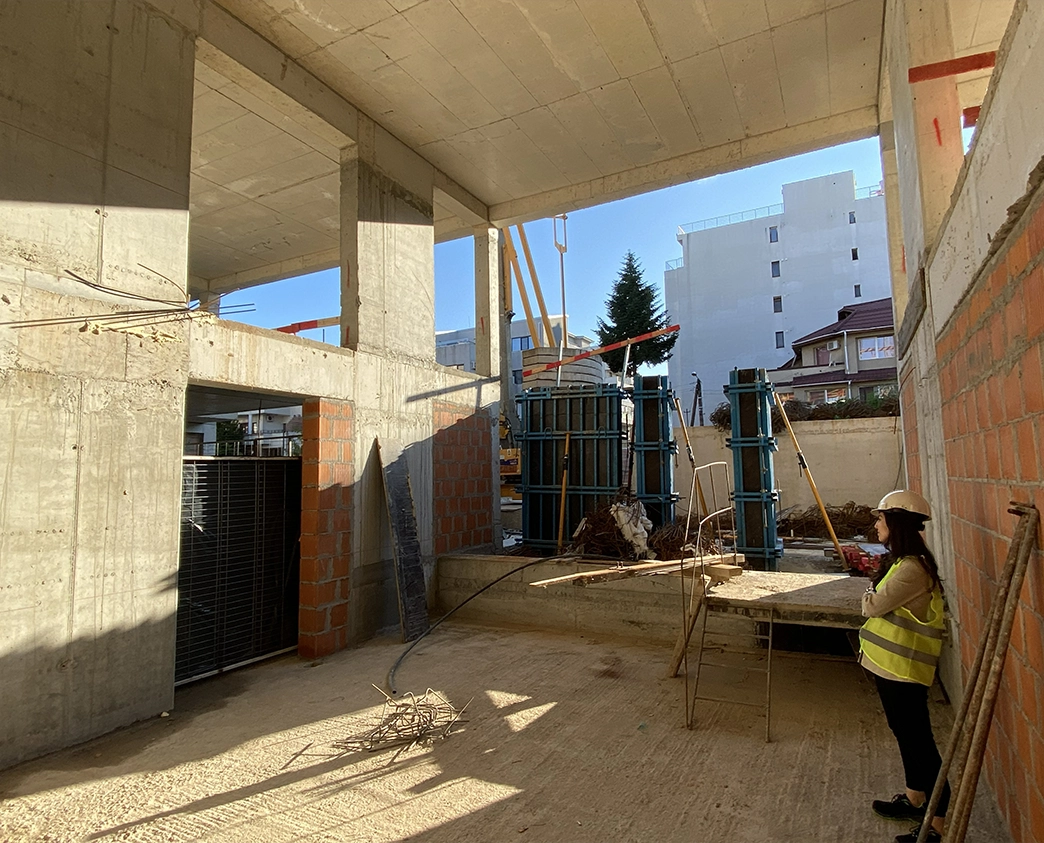
Image from the construction site of the WIN Herăstrău residential complex
WIN Alliance: How can structural engineering influence a buyer’s purchasing behaviour when buying residential property? How has the buyer’s perspective changed in this new context?
B.R.: They have become more discerning. They have become more curious and more thorough in the investigations they need to carry out. Whereas before they wouldn’t even look at such aspects – they’d just look at what they could afford – when we’re talking specifically about buyers in the residential sector – from mid-range to premium-high – they now scrutinise every single screw and come fully prepared.
Today’s buyers are increasingly hiring specialists well in advance to carry out that ‘due diligence’. And every time a disaster strikes in another country, they become more panicked and more responsible – at least until the wave of ‘panic’ subsides. However, the conclusion from the last five years is that the public is becoming a little better informed. Of course, at a general level, many of them get their information from ChatGPT or the internet, and sometimes they go down the wrong path, but for the most part they are becoming better informed. It’s still a relatively small percentage, but that percentage is growing steadily. So, I could say that expectations have risen at the same rate as awareness… Until now, they didn’t give it much thought; the budget was far more important. Now, as prices rise, they’re becoming even more aware of value and are paying closer attention in every respect.
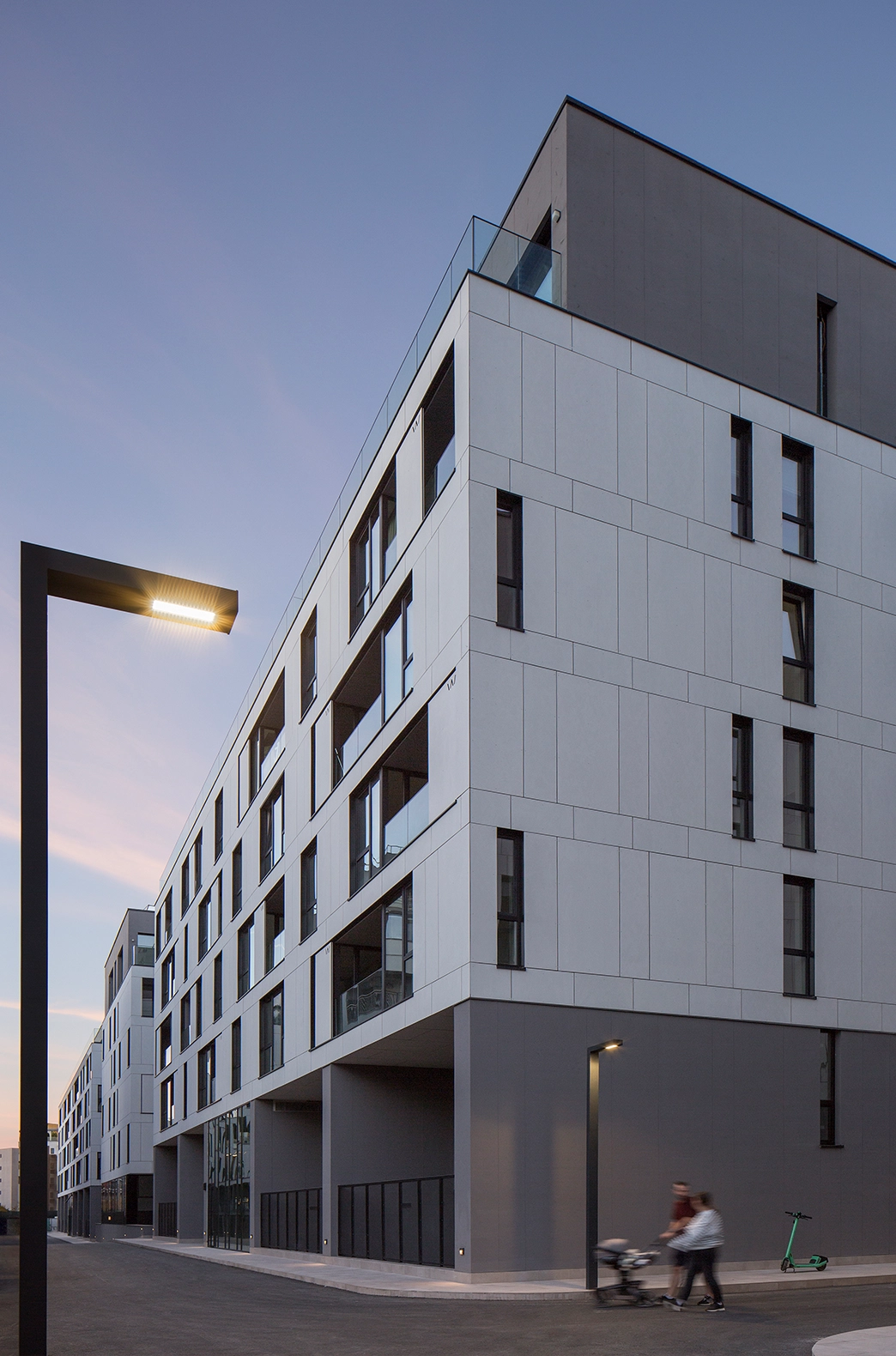
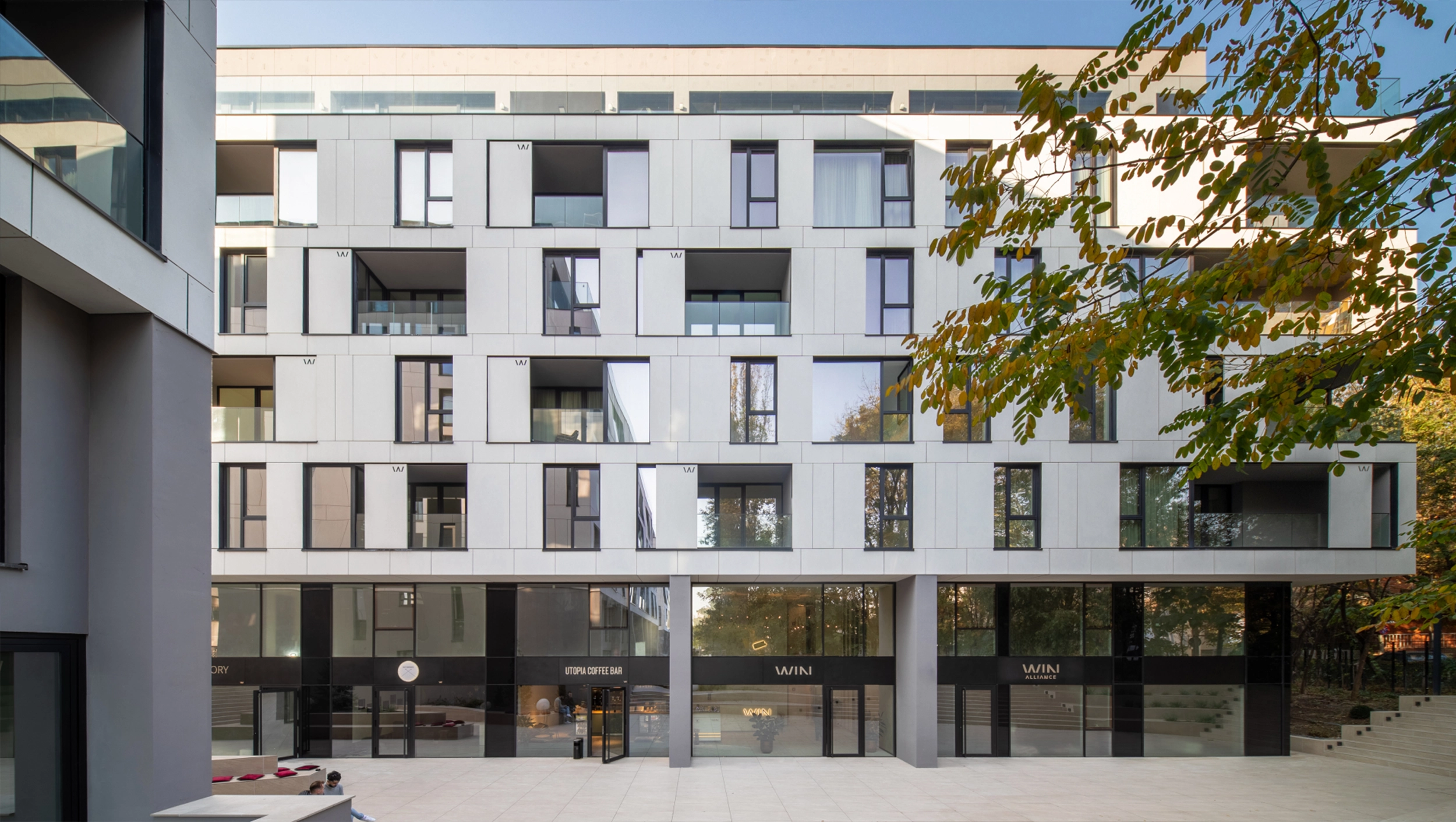
The WIN Herăstrău residential complex upon completion
WIN Alliance: From your perspective, what sets WIN Herăstrău apart within the landscape of premium residential developments, and to what extent does it reflect the model of the city we wish to build for the future?
Bogdan Radu: The WIN Herăstrău project arose from an extraordinarily good opportunity – from the site’s location in one of Bucharest’s most sought-after areas to our collaboration with a highly competent team – combined with challenges and constraints that forced us to think outside the box. For example, one of the reasons why WIN Herăstrău features such an ingenious architectural design for the flats and ‘balconies’ (it does not have balconies in the strict sense, but rather loggias) was down to the specifications set out in the Detailed Urban Plan (PUD). Had we stuck to conventional thinking, we would have fallen far short of the standard we were aiming for. The wonderful thing was that the architect, Vlad Baloșin, managed to achieve a very attractive and cohesive design without actual balconies. He succeeded in creating functional and extremely interesting buildings within very broad urban planning constraints. Together, we’ve managed to create a space of great elegance and refinement, whilst also delivering excellent economic returns. As for the city we want to see, I believe that what needs to change today in the collective mindset – and especially in the way architects and engineers work together – is that we should start by becoming a united profession. This would lead to a safer city of the future.
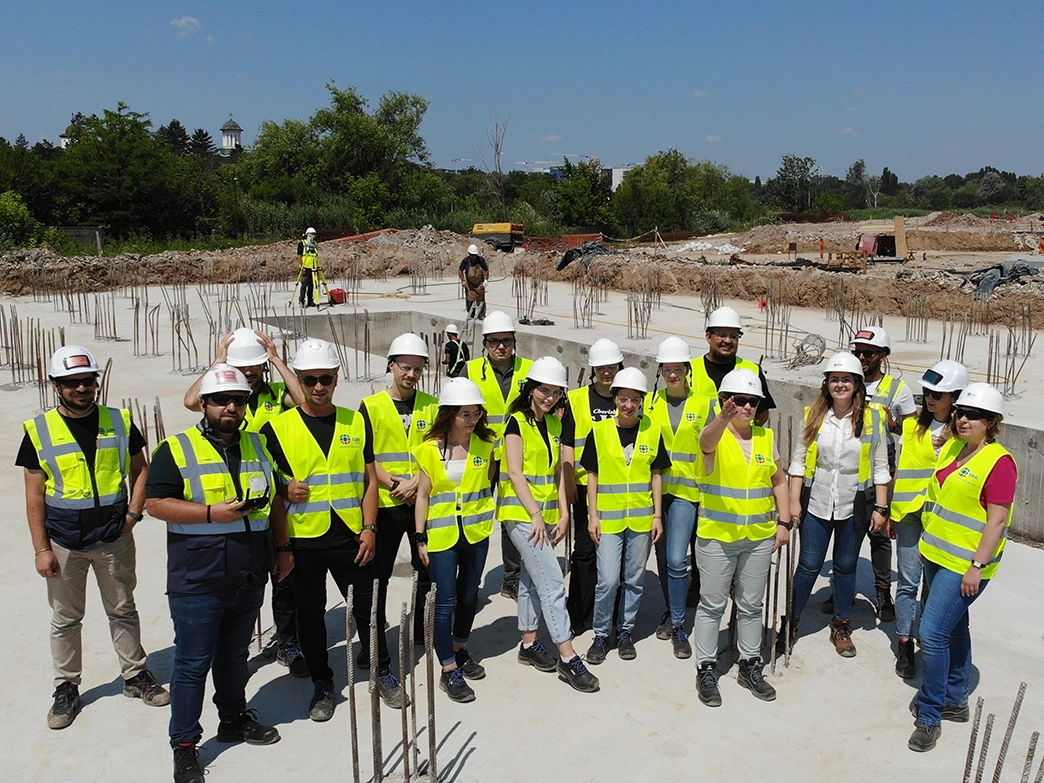
Students participating in the interdisciplinary internship pilot program initiated by WIN Alliance,
SBR Soletanche Bachy, and Metrik, on the construction site.
WIN Alliance: What project close to your heart are you currently working on, and how has it changed your perception of the way a building influences the life and well-being of a community?
B.R.: The projects that have given me the greatest sense of fulfilment in recent years have, almost without exception, been charitable projects. At the moment, we are building a palliative care hospital for children (editor’s note: Hospice Casa Speranței). Essentially, it is a hospital dedicated to children with terminal illnesses – children whom we know for certain will not make it. This is, at first, a deeply depressing and unbearably painful reality – until you realise that the hospital’s purpose, essentially, is to help these young patients pass away in a humane manner, without too much pain, with treatment that makes a real difference and, above all, with psychological counselling for the family. Because, whether we like it or not, that child will die, leaving behind a shattered family facing unimaginable psychological distress. And that family must be helped to move on and, with a bit of luck, to have another child, as many become paralysed and are never able to get past this impasse. So, the greatest satisfaction I’ve had in recent years comes from projects like these. Which, incidentally, are far fewer than I would have liked in Romania, but they do exist.
Students participating in the interdisciplinary internship pilot program initiated by WIN Alliance, SBR Soletanche Bachy, and Metrik.
WIN Alliance: Do you love Bucharest?
Bogdan Radu: Eleven years ago, when I set up the company, I had the chance to move abroad and I told myself that if the business didn’t take off within the next two or three years, I’d pack my bags and move. But I didn’t move. I learnt from a colleague in England, at one point, what it really means to see a city, to love a city. He was fascinated whenever he came to Bucharest; he was always wandering the streets, always out and about, and always turned up for work without having slept. He was working on some major projects for multinationals, and I was absolutely shocked: ‘But what do you find so fascinating about this city?!’ In a way, I saw myself in him, back when I was first sent to work for a multinational in Vienna. At night I’d wander round the city for hours, just wandering aimlessly, and the next morning, after just a few hours’ sleep, I’d head to the office. And I’d do this non-stop, for two or three weeks at a time, but I was still full of energy. He was just like that. And when I asked him, ‘What do you find so fascinating?’, he’d reply, ‘Well, you lot have an extraordinary life here! This city is a mosaic; there’s nothing like it in any other country – you won’t find anything like this back in London.’ He lived in London, and that neighbourhood was perfect; everything was sorted. But in Bucharest, you’ve got things that are well organised, yet you’ve also got ruins right next to them. And he found that fascinating. Here, nobody ever sleeps; here, you can do something at any time! And he found that fascinating! And I think I’ve learnt to see it that way too.
Interview by Ioana-Raluca Zamfir,
Visual artist and PhD. in cinema and mass-media