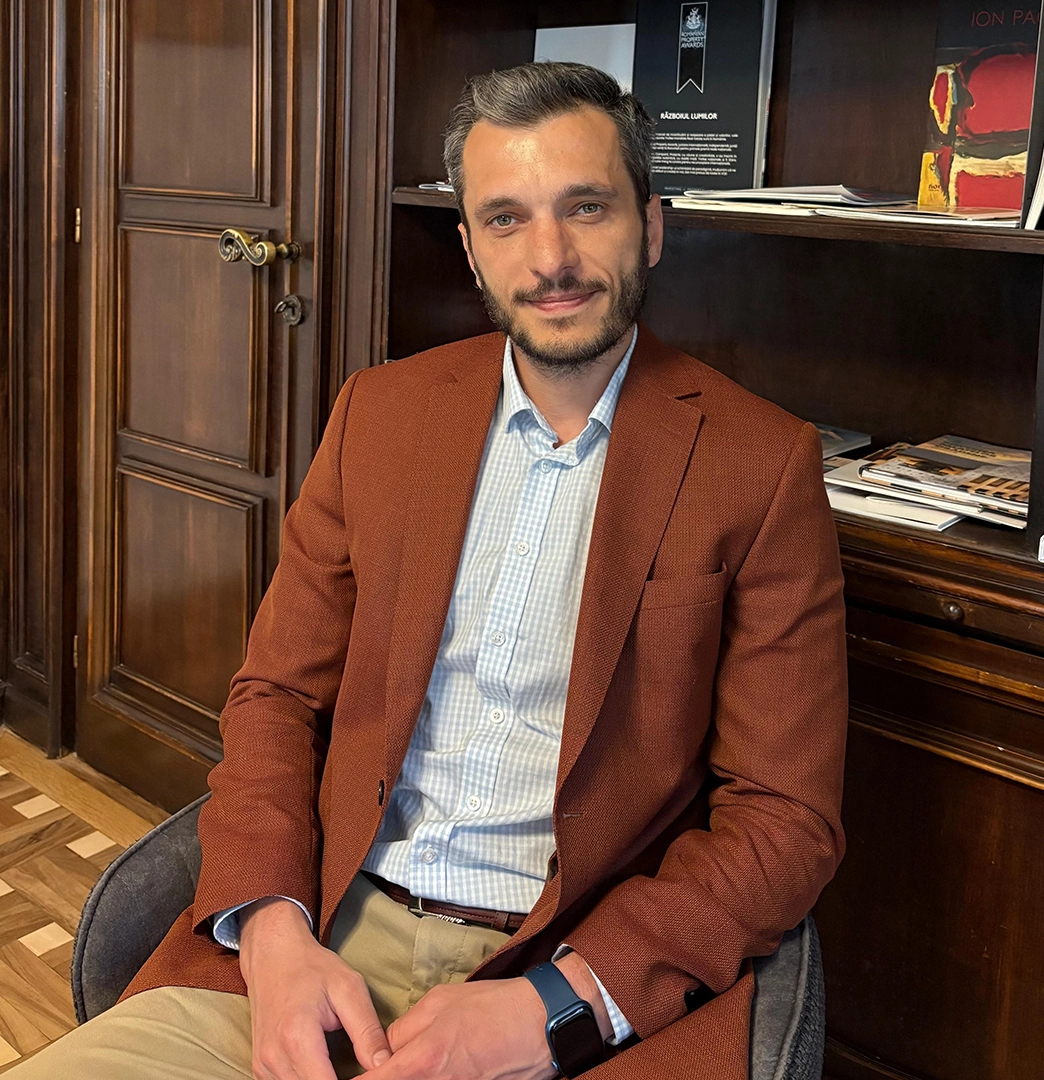
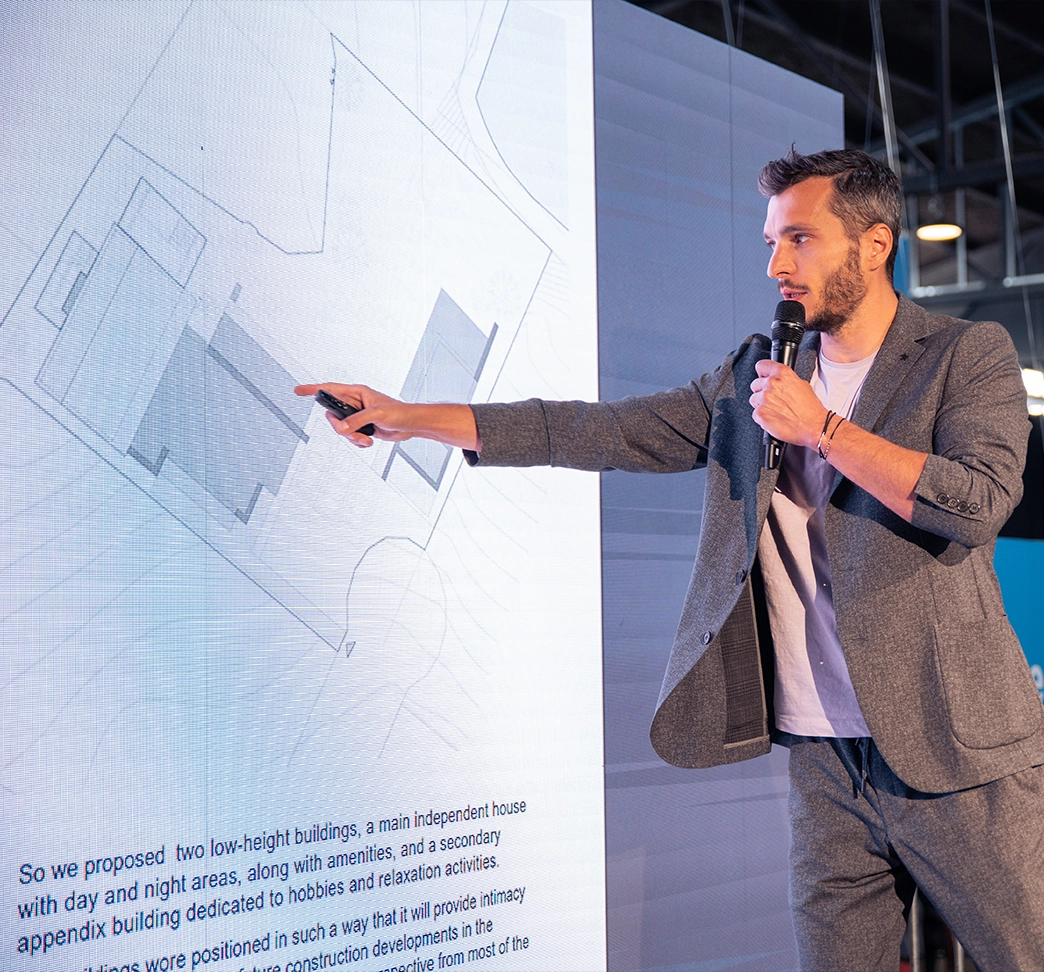
George Partnoi, a founding partner at UNIO Architects, is part of the new generation of Romanian architects who are helping to redefine the urban landscape. The integration of organic elements, the use of environmentally friendly materials and the relationship between architecture and nature are just a few of the things that fascinate him and define his work. In his view, architecture goes beyond functionality and aesthetics, becoming a tool through which the city can reclaim its human scale.
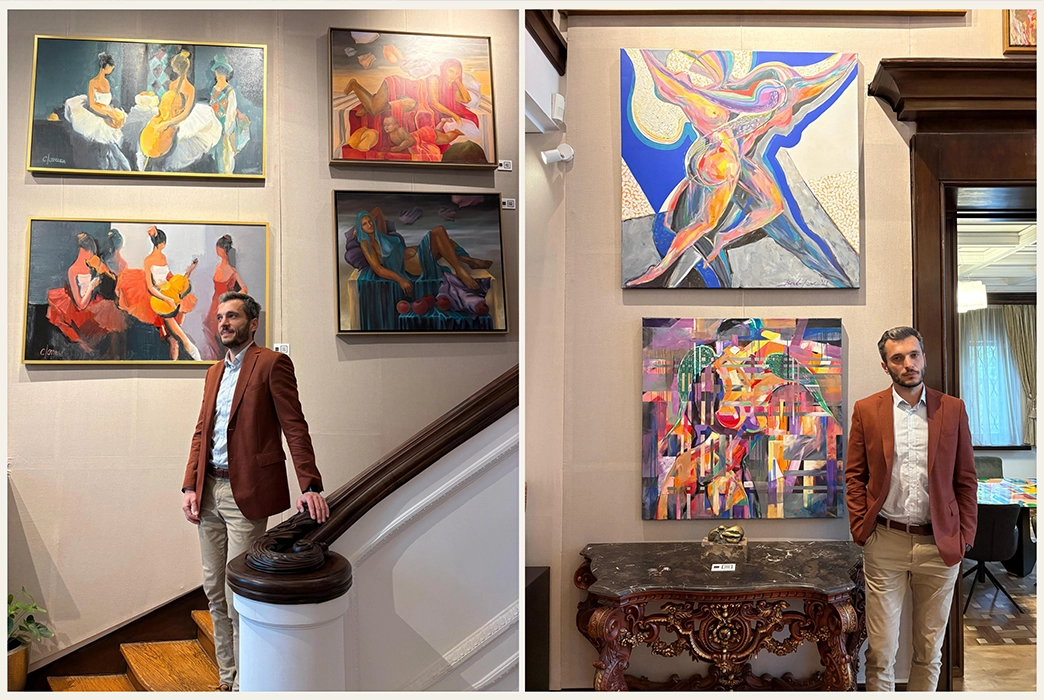
Architect George Partnoi visiting WIN Gallery (April 2026)
WIN Alliance: In a few words, what does ‘beauty’ mean for you today? In architecture, does this term retain its original meaning? Is it still an aesthetic priority, or have functionality and sustainability taken precedence?
Architect George Partnoi: Over time, there have been periods when the aesthetic element has alternated with functionality as the priority. If I were to begin my answer with a conclusion, it would be this: you cannot have aesthetics alone, just as you cannot have functionality alone. I believe the two go hand in hand. A beautiful city must contain several elements, all in balance with one another – architecture, pedestrian traffic, vehicle traffic, green spaces, parks and facilities. All of these must be well harmonised for a city to be considered beautiful. If we look at contemporary examples, we will see that most cities – not necessarily European, but predominantly European – tend to restrict car traffic in favour of creating promenades, cycle paths, and ample areas for leisure, socialising and connecting with nature. The priority that Bucharest has had in recent decades – namely, improving traffic flow – has disadvantaged the city life (and thrown the city out of balance!). We have countless examples in Western countries showing that improving traffic flow by creating wider roads merely leads to an overpopulation of cars. I believe that the focus on non-polluting modes of transport and solutions is the key to the future. It may well be that the current administration is also paying greater attention to this issue, and one example is the proposal for that network of cycle lanes, the Velo Bucharest Masterplan.
WIN Alliance: What does it mean to take on the responsibility of an architect in Bucharest? How have you managed to strike a balance between the desire to innovate and the city’s tendency to expand without rules as strict as those in other countries and without an agreed long-term plan?
G.P.: As an architect, I believe you have a responsibility to leave future generations a city that can be… I might say, bold and timeless. But here too there are several ‘stakeholders’ and multiple beneficiaries. There is a skill, essential to an architect’s work, which you don’t learn anywhere – let alone at university! – but rather acquire through experience. It is the ability to engage in discussions and negotiations with the client. Until recently, clients were less interested in contributing to society, to the urban environment, future generations or anything in those lines, and the focus was almost exclusively on profit, on ‘return on investment’. Over the last 10 years, however, more and more beneficiaries, such as those at WIN Herăstrău, have begun to recognise, understand and make sustained efforts to achieve a coherent overall vision. At an industry level, interest in quick, poorly contextualised profit has waned, and the implications of actions for the future are now analysed much more carefully.
Ultimately, it is a complex task, because you, as an architect, must fulfil a dual role: you must be able to present the project, whilst also giving the client what they want; you must know how to negotiate with them for the future of this city, without compromising the objectives they have set. Sometimes, your desire, as an architect - to create something beautiful - results in a higher cost. The desire to create an urban microclimate for the benefit of others must emerge right from the very first discussions with the client and become a shared goal. It is a matter of morality and responsibility to intervene in the urban fabric and to alter, for future generations, the appearance and functionality of a city.
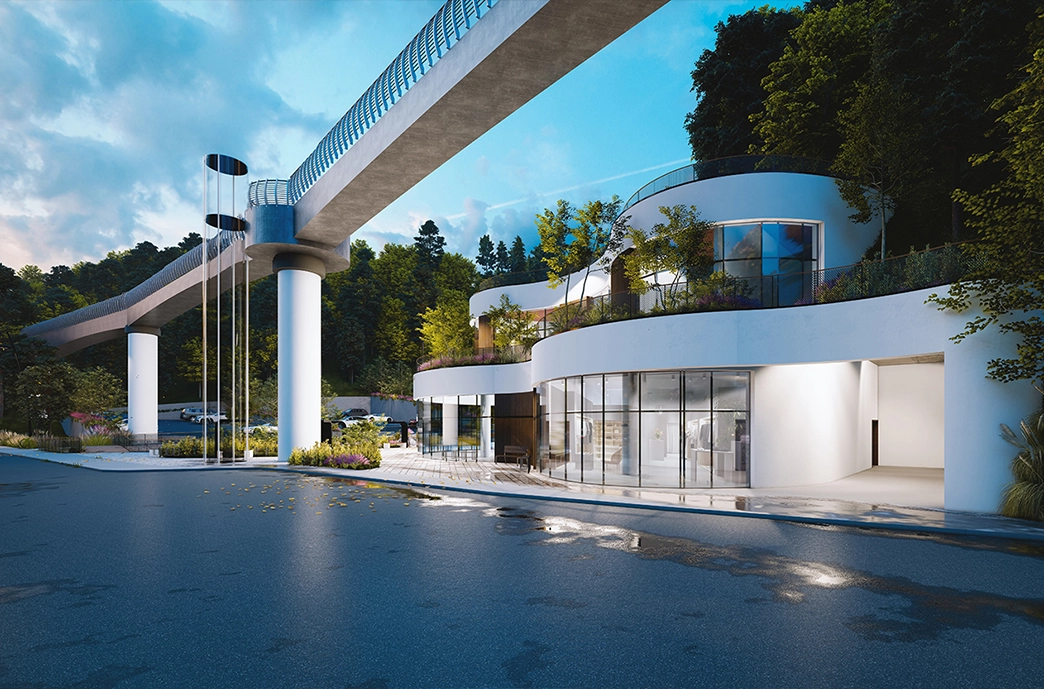
Hub Sinaia – a project by Unio Architects, signed by George Partnoi
WIN Alliance: Do you think that, in an age when young people’s role models often come from the artistic shows or the world of technology, architecture still represents an attractive choice?
G.P.: I think it’s up to each individual, but I believe architecture remains an attractive option. Perhaps, when we were young, a successful career was more readily equated with being a footballer or an actor, without necessarily understanding the complexity or the effort involved. Children, of course, are easily swayed by public attention, by the ‘glory that’s on display’. What we perhaps sometimes don’t want to admit is that we adults, too, are easily swayed. It’s up to us to show young people other professions and success stories, with their own rewards and their impact on society. I believe this is the key for future professionals: to choose what they want to do, whilst understanding what or who is influencing them in a particular direction. In fact, I think the question should be phrased as follows: do you wish to become well-known by contributing to the development of others, to leave a legacy for society and for future generations?
WIN Alliance: How did you come to choose architecture as a profession? Does it represent an art form in your life and work?
G.P.: Honestly…? I think I wanted to be an actor; that’s how I remember it (that’s in relation to the answer I gave above). But my parents persuaded me to become an architect. It was my mum who told me something quite remarkable for that time: that I could become an actor and practice in my spare time if I really wanted to, but that it would be a shame to waste my talent for drawing and all the effort I’d put into it if I didn’t see my architecture studies through to the end. I can’t remember exactly what they ‘sold’ me back then, but the fact is that I went into architecture and I have no regrets.
WIN Alliance: In UNIO Architects’ projects, what is the concrete difference between an ‘innovative project’ and a ‘well-thought-out project’? Can the use of Artificial Intelligence be considered a ‘disruptor’ of classical architecture?
G.P.: I’m pleased with this question and the candid answer I can offer. At present, in the fields of architecture and design, the contribution made by artificial intelligence is considerable. Particularly when it comes to creating presentations, everything has become hugely automated! The time you used to spend on producing high-quality renderings or creating presentation videos can now be cut by more than half; artificial intelligence can do it in a fraction of the time. The time required has been reduced from a three-up-to-four days to about half a day.
As far as innovative projects are concerned, they are generally undertaken when you are willing to take risks or embrace the new. In practice, that means innovating. When a ‘safe’ project is well thought out, it generally follows a tried-and-tested formula. It has already proven successful, but it lacks that ‘wow’ factor. It’s something… safe, proper, without that sparkle that comes from new ideas.
I think that at UNIO Architects, we – myself at least! – have become more attentive to the needs and direction of the client I’m working with. I’ve moved past that phase where I felt the need to prove myself. We have some extremely interesting projects, and I’m grateful that many of them contain that innovative element I was talking about. But at the same time, there are clients who have a fixed, somewhat restrictive budget, which effectively becomes the main determining factor. And this is where the balance between ‘conservative’ and ‘innovative’ shifts slightly. The architect’s skill lies in striking a balance, like a tightrope walker, and taking all elements into account without upsetting the final concept.
Architect George Partnoi visiting WIN Gallery (April 2026)
WIN Alliance: The differences between Romanian cities and those in Western Europe are striking and easily observable, even without specialist knowledge in the field. Which of them do you consider to be a model for Bucharest, and which is the ‘beautiful city’ for you?
G.P.: The city I really like, but which can’t possibly serve as a model for Bucharest, is Barcelona. The way in which Barcelona’s architecture was conceived right from the start – in concentric, organic zones of interest – really delights me! The way in which they subsequently moved to eliminate or limit car traffic as far as possible, to allow for the development of pedestrian thoroughfares and green spaces, is, once again, an extraordinarily appealing feature. Here in Romania, Bucharest is a special case: it lacks that architectural unity of style. It lacks a ‘code’ regarding the colours used, or even a framework document specifying the materials to be used.
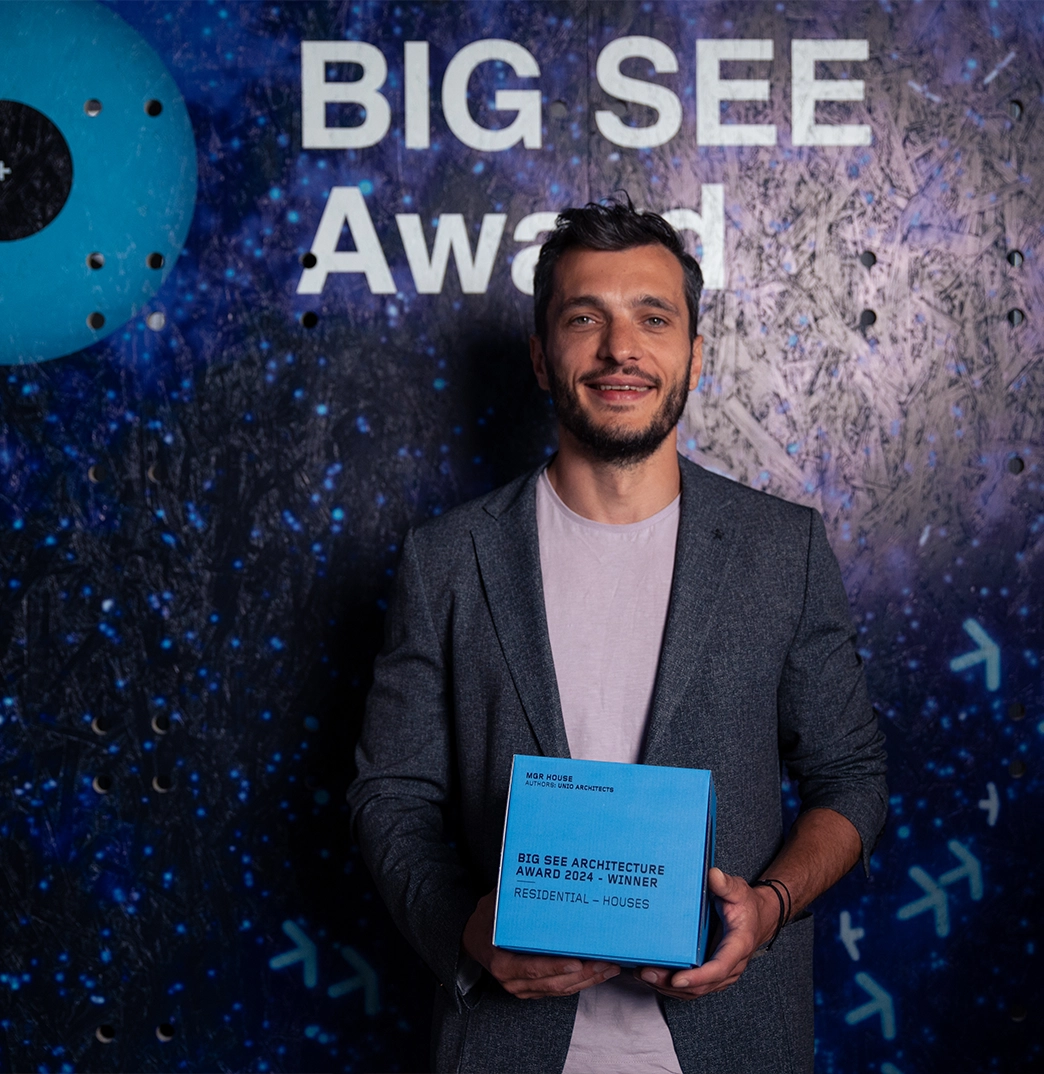
Architect George Partnoi, winner of a Big See Award, 2024
WIN Alliance: How do you view the implementation of the new regulations and standards on energy efficiency and urban planning? Do clients in Romania understand the need for them and the fact that, in the long term, this implementation translates into savings in resources – both energy and financial?
G.P.: Speaking of the 2021 implementing regulations, I can say that ‘Yes’, clients have begun to realise that these changes are to their advantage in the long term. Of course, there was some initial reluctance, as is the case in any sector, but the feedback from the market and from the beneficiaries we work with has been positive. In other words, homes built for sale using traditional, outdated methods are no longer in demand. Although implementing regulations for the nZEB concept have been in place since 2021, the reality is that it took quite a long time for them to become a standard demanded by local authorities and sought after by end-users alike. Heat pumps, solar panels and ventilation with heat recovery are now widely used, and customers looking for a flat these days no longer want just four walls, doors and double-glazed windows. They want to have at least a decentralised heat-recovery ventilation system and underfloor heating – features that create a sense of comfort and security and, at the end of the month, lower bills. A home that’s properly built from an energy-efficiency perspective ultimately generates significantly lower running costs than a conventional one. And there’s another major advantage: the fact that absolutely everything can be controlled from your phone. From the underfloor heating to the heat pumps, everything is just a tap away on your phone.
Architect George Partnoi, at the Big See Awards, presenting the winning concept (2024)
WIN Alliance: If we look at the ‘beautiful Bucharest’ of the 21st century, what have we learnt and what have we lost compared to the elegance of the interwar period or the (questionable) rigour of the communist era?
G.P.: This city is truly special, first and foremost because of the way in which its buildings have been constructed throughout history – particularly in recent history. And the ‘foundation’ of this construction has, above all, been the idea of compromise. I believe compromises were made in absolutely every aspect of construction, both in the early 20th century and in the contemporary, post-1989 period. I remember that chaotic development in the years leading up to the 2008 property bubble, which I experienced whilst working as a junior architect. The thing I cannot forget – half with amusement, half with bitter irony – was linked to the absurd demands that clients would make of us. They were very much focused on profitability and would do anything to ‘bend’ the law or render it meaningless. There was a great deal of construction going on, carried out in a chaotic manner, and some projects were of dubious quality. What’s more, building even took place during the cold season; concrete was poured, only for it to crack later on. The way things were built back then was… unimaginable compared to what we experience today! Later on, the situation calmed down somewhat, but there were still sectors where corners were cut in the name of profit.
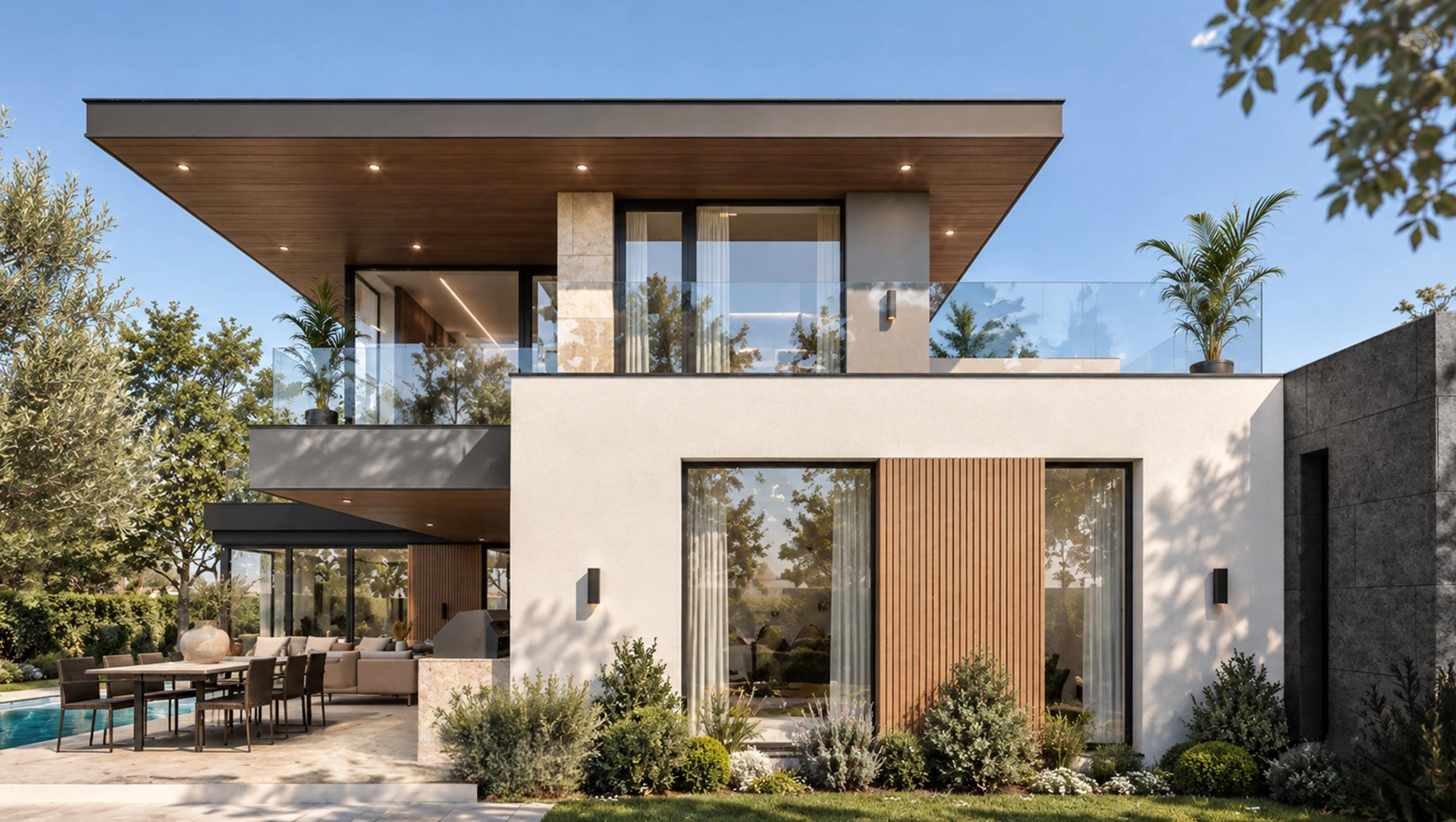
Concept Unio Architects – MTH house
WIN Alliance: How have Unio Architects’ clients’ expectations changed? What is the modern Bucharest resident looking for in a home in 2026 compared to a decade ago?
G.P.: Back when I was a junior architect, it was a completely different market; the requirements were entirely different. The focus was on maximum profitability, regardless of the circumstances or long-term outcomes. In fact, come to think of it, the very concept of long-term construction didn’t even exist. Everyone was thinking in the short term or, at most, the medium term. Today, however, I can say that I feel there has been a widespread realisation. An awareness of how to build more sustainably, both when it comes to individual homes and when we’re talking about collective development. At present, even if you take the evolution of energy efficiency in buildings as a barometer, you realise just how far we’ve come and how the focus has shifted. Whereas a hundred years ago walls were sometimes as thick as 60 cm to provide insulation and maintain a constant temperature, the nZEB (Nearly Zero Energy Building) standards do not now prescribe a fixed wall thickness, but rather limit the heat transfer coefficient. Thus, you can have a wall thickness of 25 cm, to which is added that ‘sandwich’ of mineral wool or other thermal insulation methods. A client who is planning the home they have long dreamt of and wants an ‘island’ style kitchen – around which to spend time with their family – will have specific requirements and wishes, which we must take into account and tailor to the architectural design. The same applies when a client wants a fitness room or a larger play area for children, where the little ones can play with a ball indoors. This is where the ingenuity of the team developing the project comes into play – how to reconcile the technical aspects, the budget and the client’s wishes in such a way that the result is satisfactory to both parties. At UNIO Architects, the technical side – in 99 per cent of cases, if not 100 per cent – is left to our responsibility, just as it should be everywhere else. We advise on the optimal design of the building in terms of thermal performance, budget and the cost-effectiveness of alternative energy systems, ventilation, solar panels and so on.
The conversation with the client always starts with a questionnaire that we fill out together, which helps us provide a realistic overview of the project, based on what expectations the client has for the future building.
WIN Alliance: Fifty years from now, what would you like the residents of Bucharest to say about the buildings designed by George Partnoi and the UNIO Architects team?
G.P.: That is a very good question and, honestly, I don't think I have ever thought about it from this perspective. There are renowned architects from the 1930s–1940s, the interwar period—people who left their signatures on buildings and whose names remained etched in the collective memory as architectural geniuses, such as Horia Creangă, Duiliu Marcu, and Marcel Iancu. Those commemorative plaques on buildings remind us of a time when the architecture profession was truly noble and responsibility was viewed differently, both by architects and by the general public. I believe a city's architecture is felt almost without words, and the work of architects who truly ask themselves fundamental questions about the impact buildings should have over time—those things, I believe, can be felt. Come to think of it, what I wish for most is that in fifty years, people will feel that the interventions made by us, by me, and the contribution we had in shaping this city were actually what the city needed—a beneficial contribution to its vibrancy and to the people who inhabit and love it. I think that is all I could wish for.
Interview by Ioana-Raluca Zamfir,
Visual artist and PhD. in cinema and mass-media