win-herastrau-win-real-estate
win%20real%20estate
win-gallery-win-alliance
win-gallery-alb
win-brokers-broler-bucuri-de-lux
win-brokers-white
win-tireanu-motorsport-win-alliance%20copy
win-motorport-logo-alb

WIN Alliance - State of Grace

EUGENIO RICCARDI 

Artist and interior designer

Inspired by the figure of Ovid and the theme of exile as creative transformation, artist and interior designer Eugenio Riccardi explores the relationship between myth and emotion - two sides of the same narrative thread, brought into contemporary context. Born in Rome, he studied Sociology at Sapienza Università di Roma and began his career as a carpenter in 1997. After 13 years of working under the guidance of a master craftsman, he opened his own company. Aware that he needed to further develop his knowledge and skills, in 2015 Riccardi decided to enrol at the prestigious ISIA Roma Design school. Now he lives and creates in Bucharest, a city that has become home for his ideas, exploring art design, sculpture and poetry.  

eugenio-riccardi-01 eugenio-riccardi-01

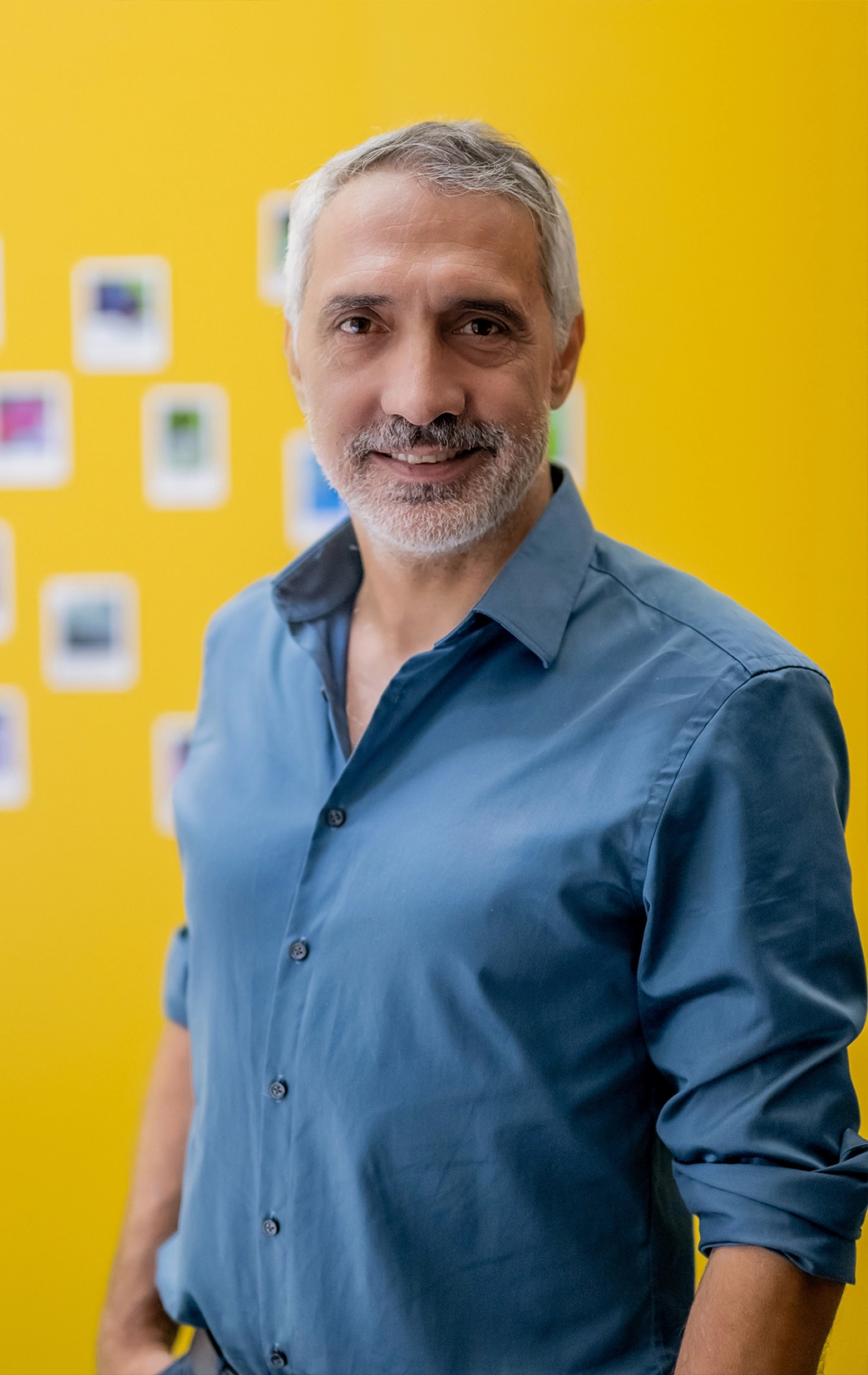
Artist Eugenio Riccardi in his Bucharest studio

WIN Alliance: You have an unconventional mix of skills and passions: you are an Italian designer, furniture creator, sculptor and poet. If you had to define yourself beyond professional titles, what unifies your artistic pursuit?  

Eugenio Riccardi: Beyond professional titles, I see myself as someone driven by a constant need to explore. What unifies my work is “(the joy of) the search itself”, whether I am designing a piece of furniture, creating a sculpture or writing a poem. 

For me, these different languages are not separate disciplines, but different expressions of the same inner vision. I am interested in the dialogue between function and emotion, between material and imagination, between what is visible and what is felt. Ultimately, my artistic pursuit is an attempt to transform ideas into experiences that can create a connection with people. 


WIN Alliance: Italy has given the world an extraordinary legacy of craftsmanship and artistic thinking. Do your Italian roots permeate the way you conceive an object, and how has living in Romania changed that perspective? 

Eugenio: Absolutely. My Italian roots are deeply embedded in the way I conceive and create an object. Italy has taught me to appreciate the intelligence of the hands, the importance of proportion, beauty and detail, but also the emotional and cultural value that an object can carry. I believe that craftsmanship is not simply a technique; it is a way of thinking, a dialogue between materiality, history and human experience. 

Living in Romania has enriched and, in many ways, transformed this perspective. Encountering a different culture, different traditions and a different relationship with materials and the manufacturing process has allowed me to look at my own Italian heritage from a new distance. It has made me more open to contrasts and unexpected connections. Today, I feel that my work exists somewhere between these two worlds. 

eugenio-riccardi-02 eugenio-riccardi-02

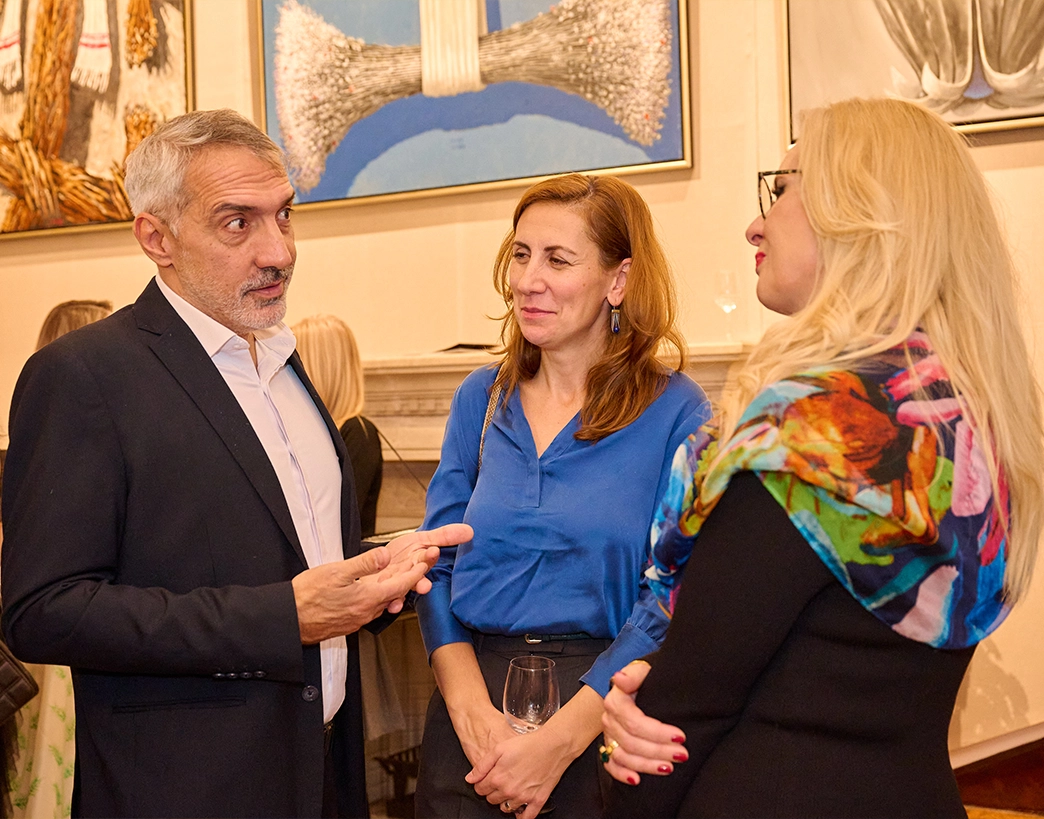
Eugenio Riccardi and his wife, Elena Tănase, at WIN Gallery, at the opening of the "Gratia Viva" exhibition (November 19, 2025)

WIN Alliance: Moving to Bucharest was not simply a geographical relocation. What brought Eugenio Riccardi here in the first place, and at what moment did you understand that Bucharest could become more than a temporary destination?  

E.R.: Moving to Bucharest was not originally a professional decision. The real reason was much more personal: I moved here to be together with the woman I had fallen in love with. At that moment, it was a decision guided more by the heart than by a plan. 

Little by little, it began to reveal itself to me in a much deeper way. I discovered a city full of contrasts, energy, imperfections and unexpected beauty.  

I understood that Bucharest could become more than a temporary destination when I stopped seeing it as “her city” or as a place I had moved to for someone else and started building my own relationship with it. I began creating, meeting people, developing projects and finding inspiration in its energy and contradictions. 

Today, I feel that my journey to Bucharest was shaped by love, but it also became a journey of personal and artistic discovery.  

WIN Alliance: Do you recall the first moment you understood that creating furniture was a language through which you could express yourself? When did interior design become a vocation?  

E.R.: I believe that, in some way, the answer goes back to my childhood. I was always building something with my hands. LEGO bricks were probably my first creative language: For me, it was never just about playing—it was about the instinctive pleasure of creating something from nothing. 

However, life does not always follow such a direct path. Family expectations and pressures led me first towards a degree in Sociology. It was an interesting and valuable experience, and it taught me about people, society and human relationships. But at a certain point, I understood that - no matter how fascinating - it was not truly my path. 

Furniture design and interior design eventually became the natural languages through which I could express that part of myself. They allowed me to combine creativity, function, emotion and craftsmanship. I did not experience this as suddenly discovering a new vocation; rather, it felt like finally recognising something that had been there since childhood. 

eugenio-riccardi-03 eugenio-riccardi-03

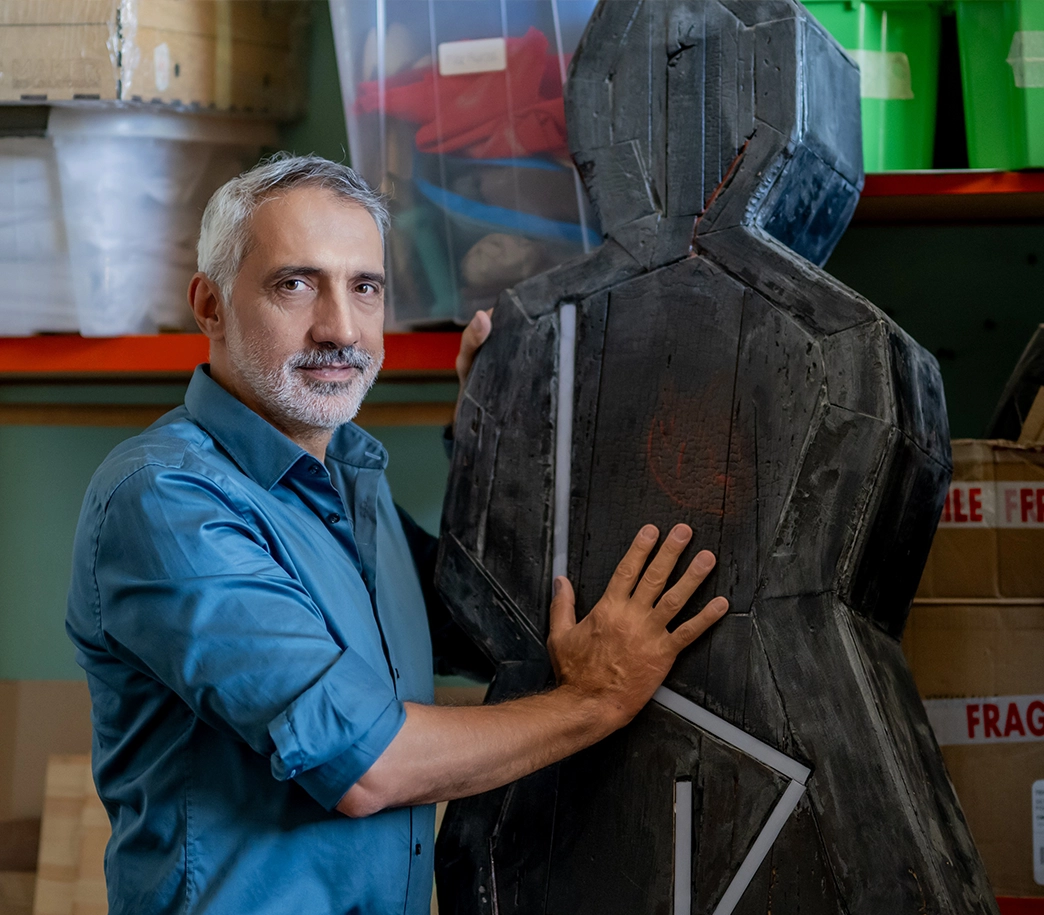
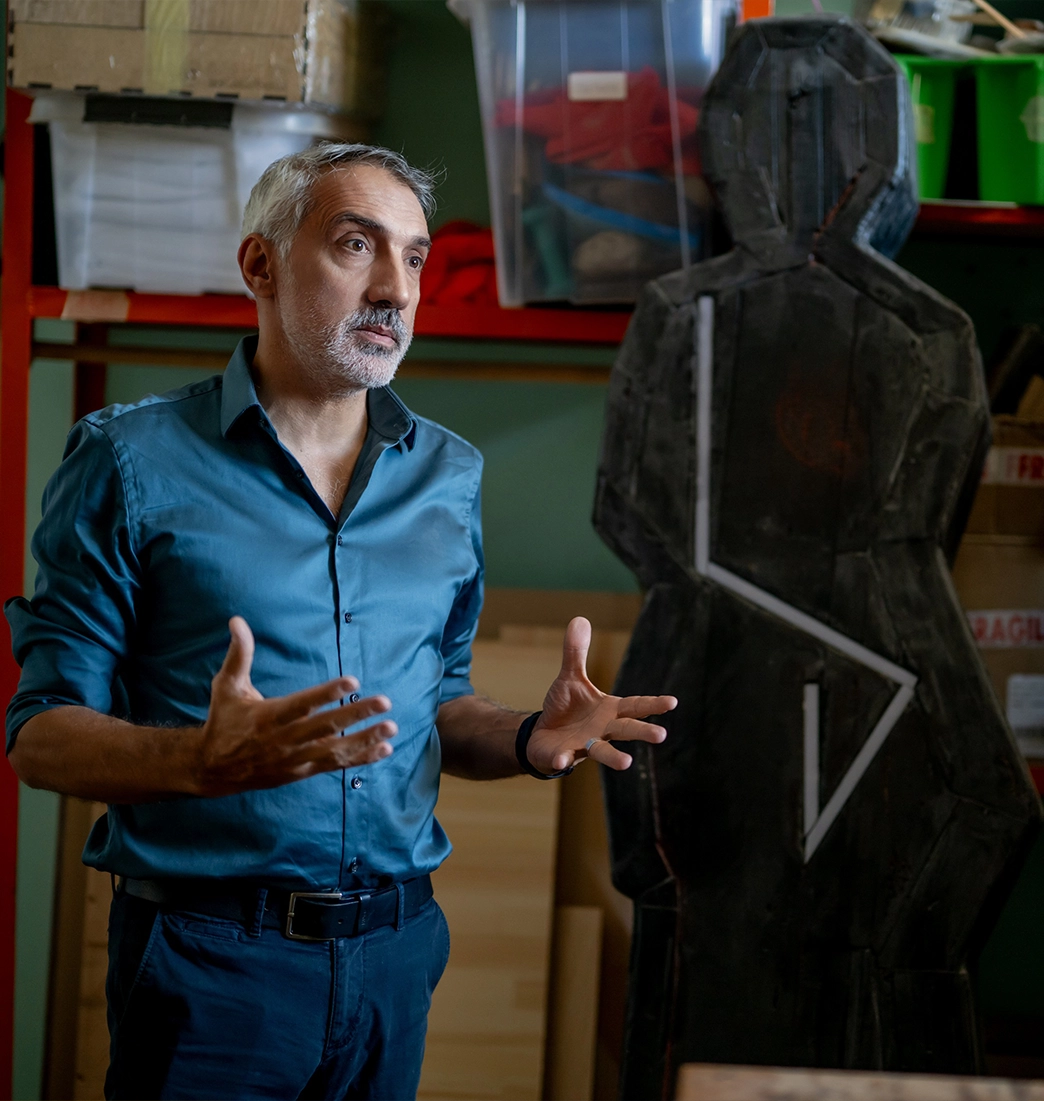
Artist Eugenio Riccardi in his Bucharest studio, next to the sculpture "Medea,"
part of the "Modern Metamorphoses" project.

WIN Alliance: You are on the verge of launching a complex project, „Modern Metamorphoses”, consisting of art installations that incorporate multiple authors and forms of expression: furniture, sculpture, painting, collectible design, music and poetry, gastronomy and scent. Do these disciplines represent different creative territories for you?

E.R.: Modern Metamorphoses was initially born from the poetry I write. Poetry has always been the most immediate way for me to express sensations, emotions and states of mind.  

But I am also a very visual person. At a certain point, I felt the need to give some of these poems a different form. I began transforming the words into sketches and drawings. They evolved and became three-dimensional models, small experiments with materials and forms, and eventually developed into pieces of design art and larger installations. In this sense, the process was very organic: a poem became an image, the image became an object, and the object eventually became an experience. 

I needed different forms of expression to convey the message. Each discipline reveals a different dimension. Poetry is often the starting point. Together with drawing, design, sculpture, music, scent and the other elements it became tangible and immersive. Modern Metamorphoses is therefore the result of this transformation.  

eugenio-riccardi-04 eugenio-riccardi-04

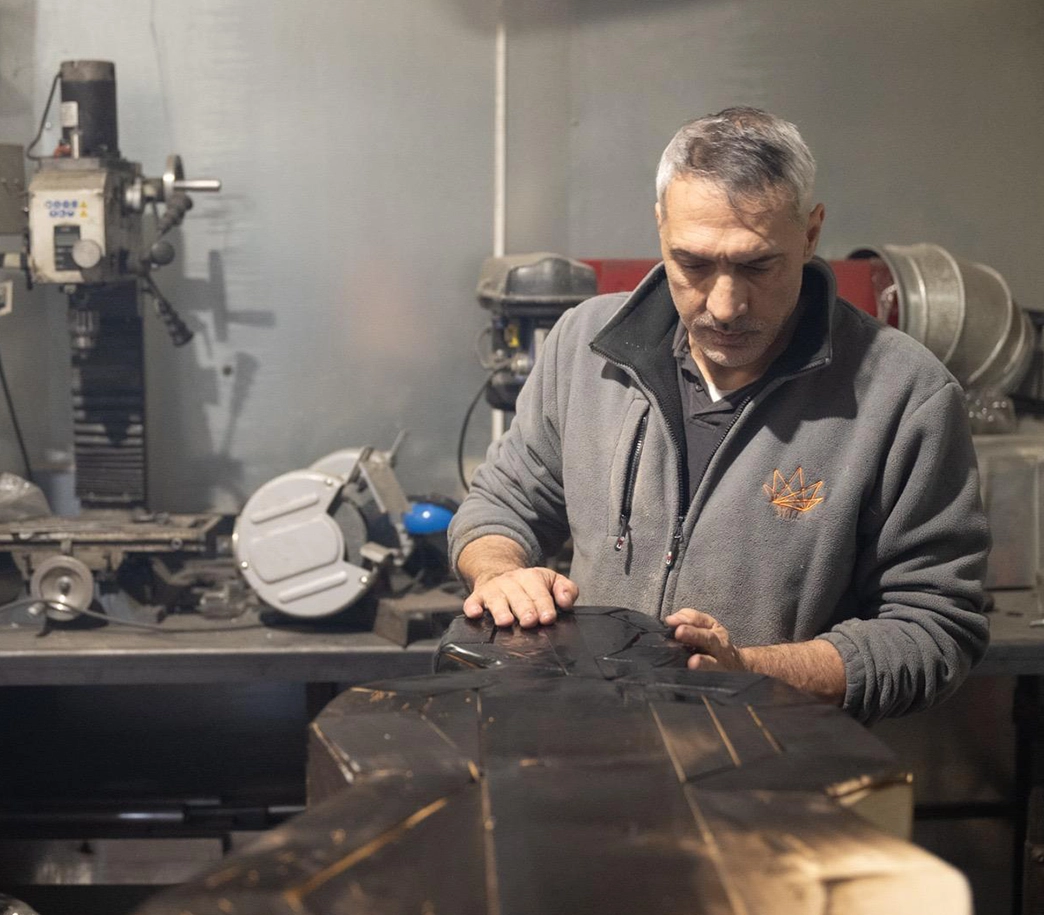
Artist Eugenio Riccardi in his Bucharest studio, while preparing the sculpture "Medea."

WIN Alliance: “Modern Metamorphosis” revolves around seven characters pertaining to the Greek and Roman tradition, as you perceive them. There is a strong sense of emotional tension in your mythological figures - Medea, Icarus, Theseus and Jason, just to name a few. Why was it important for you to return to something as ancient - and as complex - as raw human emotion? 

E.R.: I would not describe it as a return to something ancient. For me, myths are not simply stories belonging to the past. They are enduring interpretations of impulses, emotions and inner conflicts that have always existed in us , and in essence, have never really changed. 

For example, Medea, Icarus, Theseus or Jason were exponents of love and betrayal, ambition and failure, desire and fear, courage, obsession, loss and the need to overcome our own limits. These sentiments were present thousands of years ago, and they are still in us today. 

What has changed is not their substance, but the tools to understand and express them. Ancient mythology used gods, heroes, monsters and epic narratives to give meaning to the complexity of human nature. Today, we have different languages, different technologies and different artistic tools, but we are still trying to answer many of the same questions. 

This is why I was interested in working with these mythological figures. I see them as archetypes that can still speak to our contemporary condition.  

Modern Metamorphoses is therefore not an attempt to bring mythology back to the present but rather to reinterpret them in contemporary key. 

eugenio-riccardi-05 eugenio-riccardi-05

Artist Eugenio Riccardi in his Bucharest studio, next to the sculpture "Medea,"
part of the "Modern Metamorphoses" project

WIN Alliance: These figures are often perceived as distant archetypes, yet in your interpretation they seem profoundly contemporary. Is Medea only the emblem of betrayal and rage? Is Icarus still about ambition and the danger of exceeding one's limits or do you see something beyond that?  

E.R.: I think these myths are still profoundly modern precisely because they are complex. They cannot be reduced to a single interpretation. Medea is not only betrayal and rage, just as Icarus is not simply ambition and the danger of exceeding one’s limits. They are layered characters with continuous movement between different emotional states, and it is this movement that interests me. 

With my work, I have tried to crystallise a moment in which the inner transformation becomes visible. And there is a paradox at the heart of my work: I try to speak about movement through objects that are, by their very nature, immobile. I am interested in creating a static form that somehow contains the tension of something that is constantly changing. 

This is also why my collaboration with visual artist Ioana Raluca Zamfir is so important to the project. For each installation, Raluca will create three paintings. What I try to freeze within a single sculptural or design object, she expands through painting into a broader realm. The three works allow the installation to contain different moments, different states of mind and different perspectives on the same character. 

In a sense, I isolate and crystallise one emotional instance, while Raluca gives that instance a „before” and an „after”. This gives the story greater depth. 

WIN Alliance: What is the hidden „architecture” of this project? Beyond the visual and sculptural dimension, who are the members of the team and the partners involved in making „Modern Metamorphoses” a reality?  

E.R.: The hidden architecture of Modern Metamorphoses is, above all, the network of people who have gradually gathered around the project. It began as a personal idea and initiative, but along the way it became clear that a project of this complexity and ambition could not (and should not!) remain a solitary endeavour. 

The first person to join me was the visual artist Ioana Raluca Zamfir, whom I mentioned earlier. Shortly after, we realised that we needed a more structured approach and this is where my wife, Elena Tănase, also became an important part of the project. She brings a very different perspective from mine: a rational, organised and pragmatic approach. From this initial nucleus, we decided to build a broader team: not simply a group of collaborators, but a team of people working towards a common goal. Each person contributes with a specific skill, perspective or sensitivity, and this diversity is essential to the project: Laura Grigore (Communication & PR) is helping translate the complexity of the project into a clear dialogue with the audience and the media; Beniamin Steau (Project Manager) is transforming the creative vision into an effective production process; Robert Miklos is our specialist in fundraising and Georgiana Dinu is our photography and „behind-the-scenes”creative force.  

WIN Alliance: Any massive-scale project comes with a group of supporters, and your „Modern Metamorphoses” makes no exception. Who is the most important partner in this endeavour?  

E.R.: I would like to first mention WIN Gallery and put a bit of an emphasis on this collaboration. It was exactly a year ago when I attended the first vernissage, in September 2025. The meeting I had with Irina Stoenescu, the president of the Gallery, changed the way I see art and the way I see myself as an artist.  She came to understand and love the project in the most natural way possible and brought WIN Alliance as a whole into this crazy experience.   

This team is still growing, I see it as part of its hidden architecture: just as the installations bring together different artistic languages, the project itself brings together different people and professional skills. 

WIN Alliance: There is something almost Ovidian in your artistic journey: an Italian creator who finds himself living and working in Romania, the country connected to the ancient exile of the poet at Tomis. Do you see this parallel as a mere coincidence or is it a source of fascination and inspiration?  

E.R.: I do see parallels with Ovid, although I would never describe my experience as an exile in the sense that he experienced it. The historical and personal circumstances are obviously very different. Yet there is something about his relationship with distance, with leaving one’s homeland and finding oneself in a foreign place, that resonates with me. 

Living away from Italy has become, for me, both a gift and a kind of condemnation. It is a gift because distance allows you to look at your own culture, your memories and even yourself from a different perspective. But it can also be a form of separation, a constant awareness of what you have left behind and of the space that now exists between you and the place you once considered home. 

In Ovid, I find pieces of myself beyond exile; I find the echoes of longing, displacement, nostalgia, transformation, loss and the need to redefine oneself when the world around changes. 

So, I would say it began as a coincidence, but it gradually became a source of fascination and inspiration.  

eugenio-riccardi-07 eugenio-riccardi-07

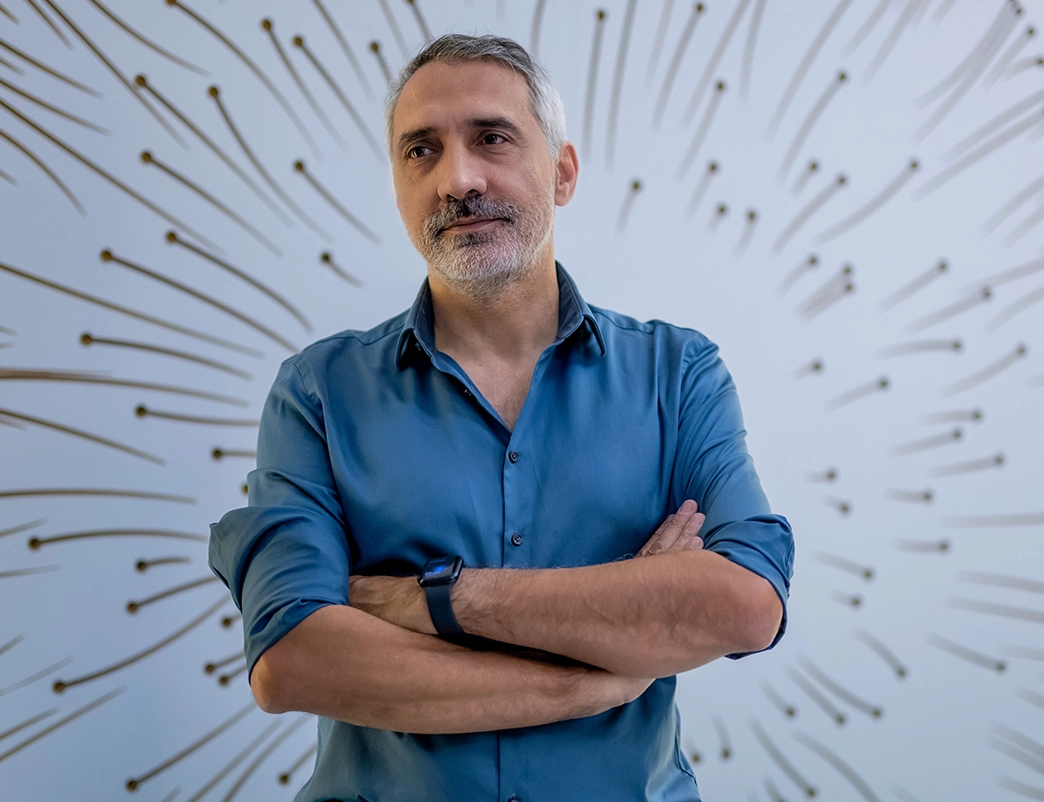
Artist Eugenio Riccardi in his Bucharest studio.

WIN Alliance: After working with spaces, furniture and objects intended to inhabit people's lives, you are now creating works that seem to inhabit the psychological space of the viewer. Is this new project also a form of personal metamorphosis?  

Eugenio: Absolutely. I think Modern Metamorphoses is, before anything else, a personal transformation. Leaving Italy created a structural change in my identity. Moving away from everything I knew meant stepping outside my comfort zone and, in many ways, questioning the entire world I had built around myself my certainties, my professional identity, my relationships with people and with my own creativity. 

Distance forced me to look inward. I had to dig deeper into myself to find answers, but also to find the courage to take a step that, for a long time, I considered almost absurd and even dangerous: to become an artist. 

Perhaps this is why the project feels so personal. I did not arrive at art because I had everything figured out. I arrived at it precisely because I had to question everything.  

Interview by Ioana-Raluca Zamfir,
Visual artist and PhD. in cinema and mass-media