win-herastrau-win-real-estate
win%20real%20estate
win-gallery-win-alliance
win-gallery-alb
win-brokers-broler-bucuri-de-lux
win-brokers-white
win-tireanu-motorsport-win-alliance%20copy
win-motorport-logo-alb

WIN Alliance - State of Grace

Jazz as a form of liberation

Interview with LUIZA ZAN

Our conversation with Luiza Zan began with a curiosity about the fascinating world of jazz. It evolved into a much broader and more open discussion about ‘vulnerability’ and the freedom to create. Refined, contemplative and possessing a unique artistic sensibility, Luiza explores the relationship between voice and matter, seeking improvisation as a form of ultimate liberation. WIN Alliance and WIN Gallery were delighted to support and promote Luzia ZAN and the Muse Quartet at the EFG London Jazz Festival, bringing the energy of jazz to a diverse and enthusiastic audience.

luiza-zan-01 luiza-zan-01

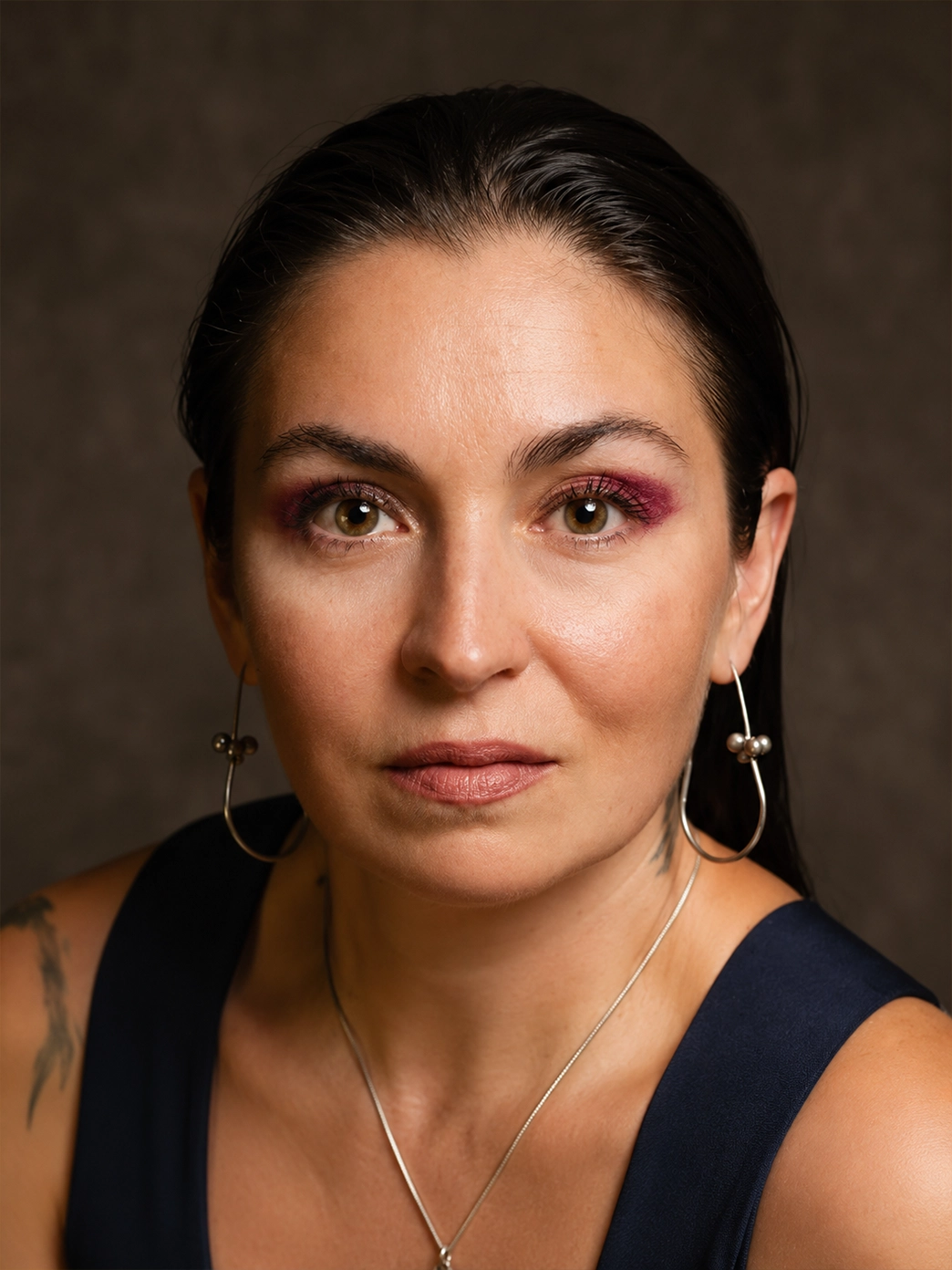
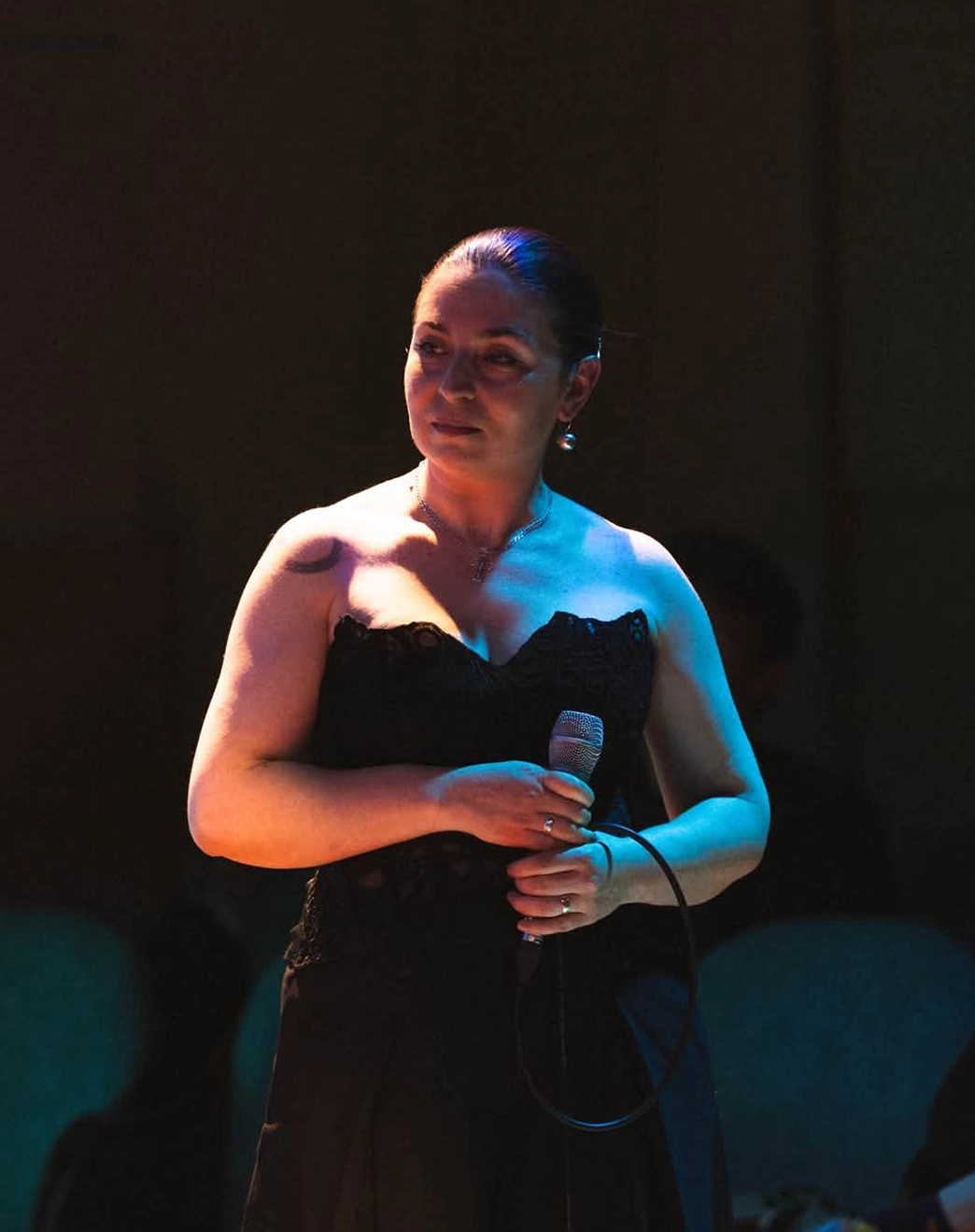
Artist portrait – Luiza Zan

WIN Alliance: What does ‘liberation’ mean to Luiza Zan in the context of jazz music? Does freedom of expression conflict with the rigour of musical discipline?

Luiza Zan: Freedom without discipline means anarchy, disorder. And I love rigour just as much as I love freedom. Being free in jazz means improvising within a fixed form; it means being flexible and creative within a defined structure. In jazz, I discovered the freedom to explore new colours. I’d played a great deal of classical music before discovering this genre, and jazz revealed to me a freer world, a more complex world, because behind that freedom there can lie many question marks.

I believe that artists, in general, must define what they wish to convey through their art. A jazz musician has a duty to know the ins and outs of this genre inside out. When they are preparing to deliver a message, they believe in and which the audience understands, all that is needed is for them to feel it.

You cannot ask the audience to understand, on a cognitive level, what you do as an artist. But you must have a thorough understanding of all the intricacies of this art form, all the limitations and freedoms it affords you. We could say that music in general – and jazz in particular – is also a science, couldn’t we? That piece of music must be very well thought out, very well prepared, and the artistic moment must be very solid, so that the emotional aspect is perceived first and foremost, not the mathematical side of the music. Music is, after all, mathematics, art and freedom.

luiza-zan-02 luiza-zan-02

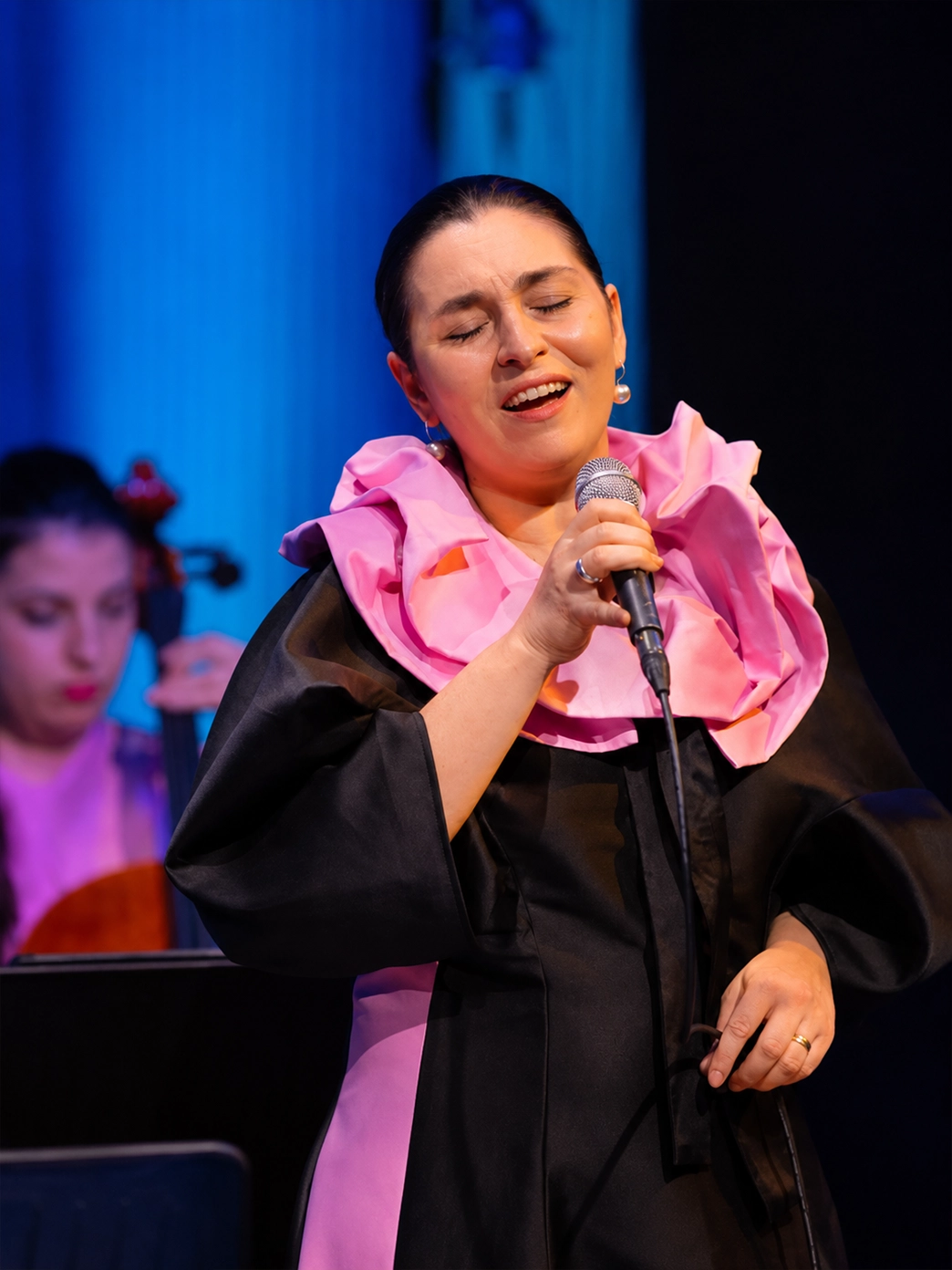
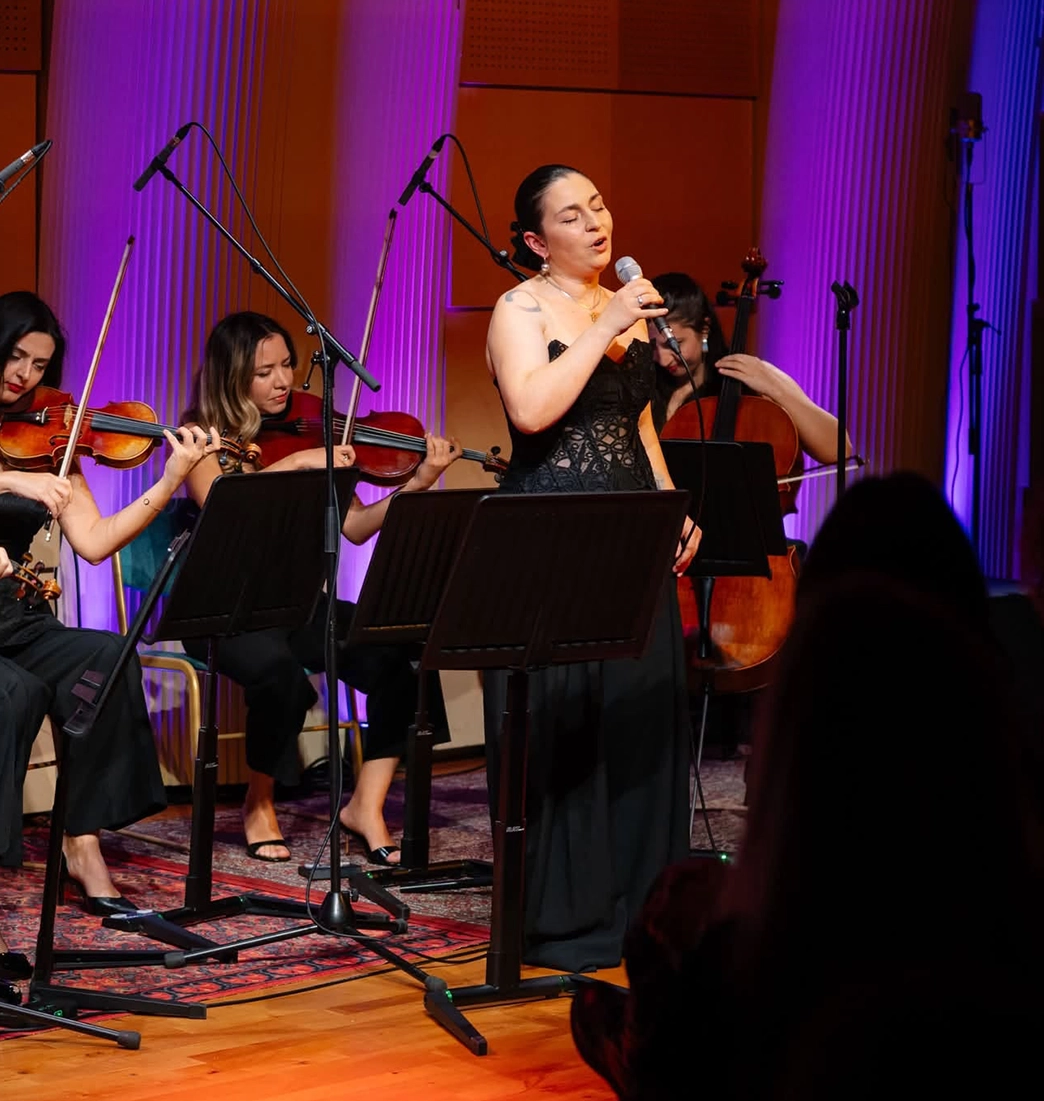
Luiza Zan at the EFG London Jazz Festival, November 2026

WIN Alliance: Jazz involves living intensely in the present moment and conveying emotion. The voice transforms the notes into an explosion of nuances and colours. How has your relationship with your own voice changed over time?

L.Z.: That’s a very good question, especially at this stage in my life, now that I’m over 45 and have had to come to terms with a new ‘me’. With a more mature voice, with a timbre that sometimes surprises me when I’m practising. This stage of life is extraordinary; I’m grateful for all these changes, which do nothing but bring me the joy of an interesting present full of lessons to be learnt! 

Through my voice, particularly in jazz, I have discovered that I can push the boundaries beyond what classical music has offered me. Music is, first and foremost, about emotion, but I feel that emotion, these days, is no longer expressed as naturally or as sincerely as it once was. Here I am referring not only to musicians, but also to the audience, to the listener. After all, music is both a language and a channel of communication. However, a problem arises, one found in both ‘camps’ – that of the audience, but also that of a significant proportion of musicians – namely, the fact that we do not know how to communicate. The problem with audiences attending a music concert, of any kind, is that they have become so accustomed to taking shortcuts that they can no longer perceive music in any depth. We like to communicate using shortcuts, to use abbreviated words. We like to use elements borrowed from other languages which we fail to translate properly, instead of delving into the depths of the language we have at our disposal to convey a message full of emotion. I return to what I said at the outset: music is a language, it is a channel of communication, and musicians have the same duty to abandon shortcuts and return to the primary purpose of this art – the direct transmission of emotion.

luiza-zan-03 luiza-zan-03

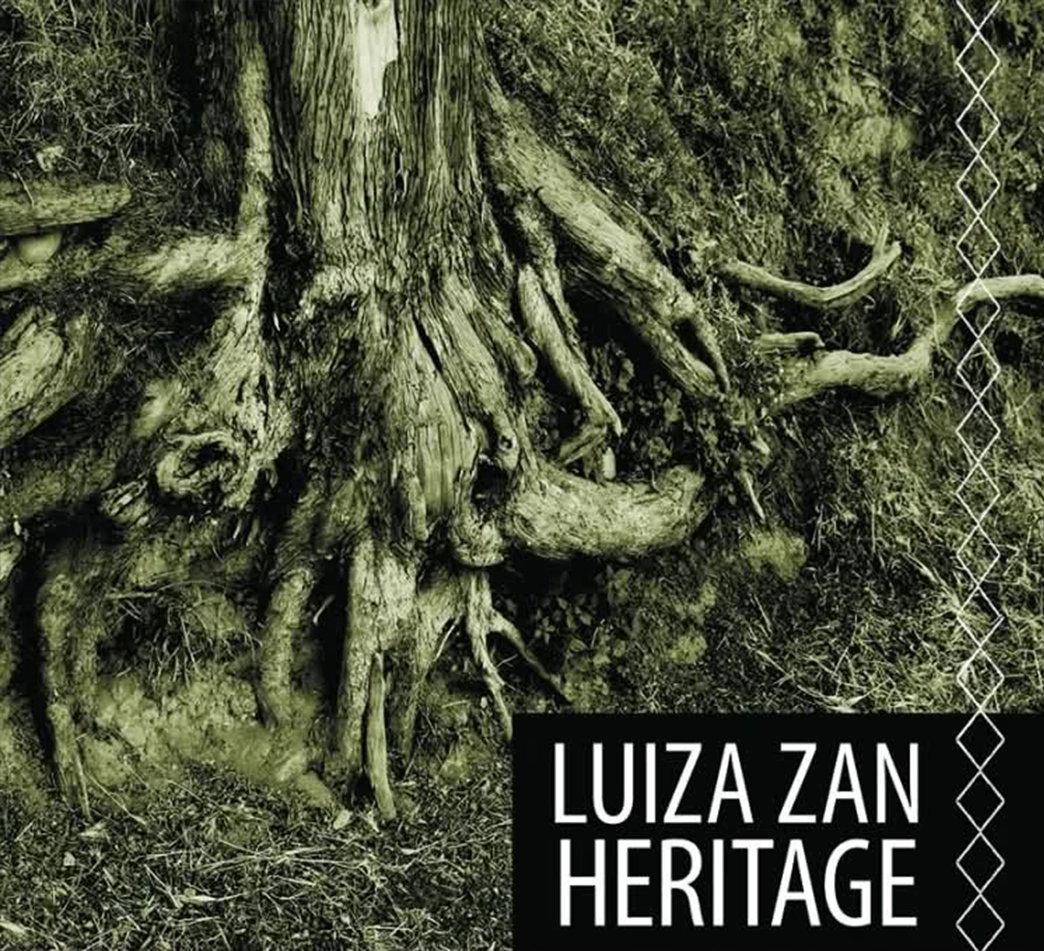
Cover of the album "Heritage"

WIN Alliance: Tell us about the albums ‘Heritage’ and ‘In My Village’ – two distinct elements in your repertoire that explore the relationship between one’s roots and artistic transformation.

L.Z.: ‘Heritage’ was written whilst I was mourning my mother. It was recorded on the very day I also lost my grandfather, who was an accordionist. Somehow, that immense grief gave rise to a profoundly human form of artistic expression, an organic musical sorrow that I cannot compare to or express in any other way. 

And ‘In My Village’, written during the pandemic, is about moving from the city to the village, with all the frustrations, surprises, inconveniences, amazements, joys and delights that come with such a move. I’ve tried to give voice to the elements of nature that I love in my village; I’ve tried to capture some of the emotion I feel when I hear the herd of cows or the flock of sheep, when it rains on my favourite tree, when the rainbow appears from the same spot every time, when I walk up the hill towards the 13th-century church….

WIN Alliance: You have explored the intersections between jazz, symphonic music, the classical repertoire and musical forms belonging to different cultural worlds. What do you think jazz can learn from the visual arts, and what can it, in turn, offer to painting, sculpture or dance?

L.Z.: Ah, we artists have so much to offer this world… Jazz, being the art form situated at the intersection of reverie and rigour, is, I believe, the most beautiful artistic expression in music. It moulds itself easily to any emotion and can listen to what others are seeing, then rendering the most delicate soundscape through music.

I believe we should return to a point ‘zero’, a starting point from which we can bring art back to a realm of exploration that makes you think. Jazz has become ubiquitous of late. We’ve come to discover it in other art forms; it has penetrated cultural spheres we might not have expected. Whereas before we had the ‘café-concert’ as an artistic space where jazz adapted to a new kind of audience, now almost everyone knows what bossa nova is. Almost everyone listens to swing. In films, in advertising, in choreographed sequences, at the grand opening ceremonies of competitions – jazz is everywhere. 

And that makes me happy! To see that jazz has become almost mainstream, that it is no longer a niche genre, as it was until some time ago, is an extraordinary achievement. And even if it doesn’t sell as well as mainstream music – it still lags behind in that respect, a sort of ‘stepsister’ to classical music – the interest I see from the younger generations can only fill me with delight and satisfaction.

And there’s something else! I believe that jazz has the most to offer of all musical genres, because it moves from a strong sense of rigour – in terms of the musical technique employed – towards total freedom of exploration. It doesn’t have a set formula, unlike other musical genres, and that means it has a much more interesting palette of colours – a sort of Pollock of music. That’s exactly what I was thinking: that it’s a sort of abstract art within the visual arts, so to speak.

luiza-zan-04 luiza-zan-04

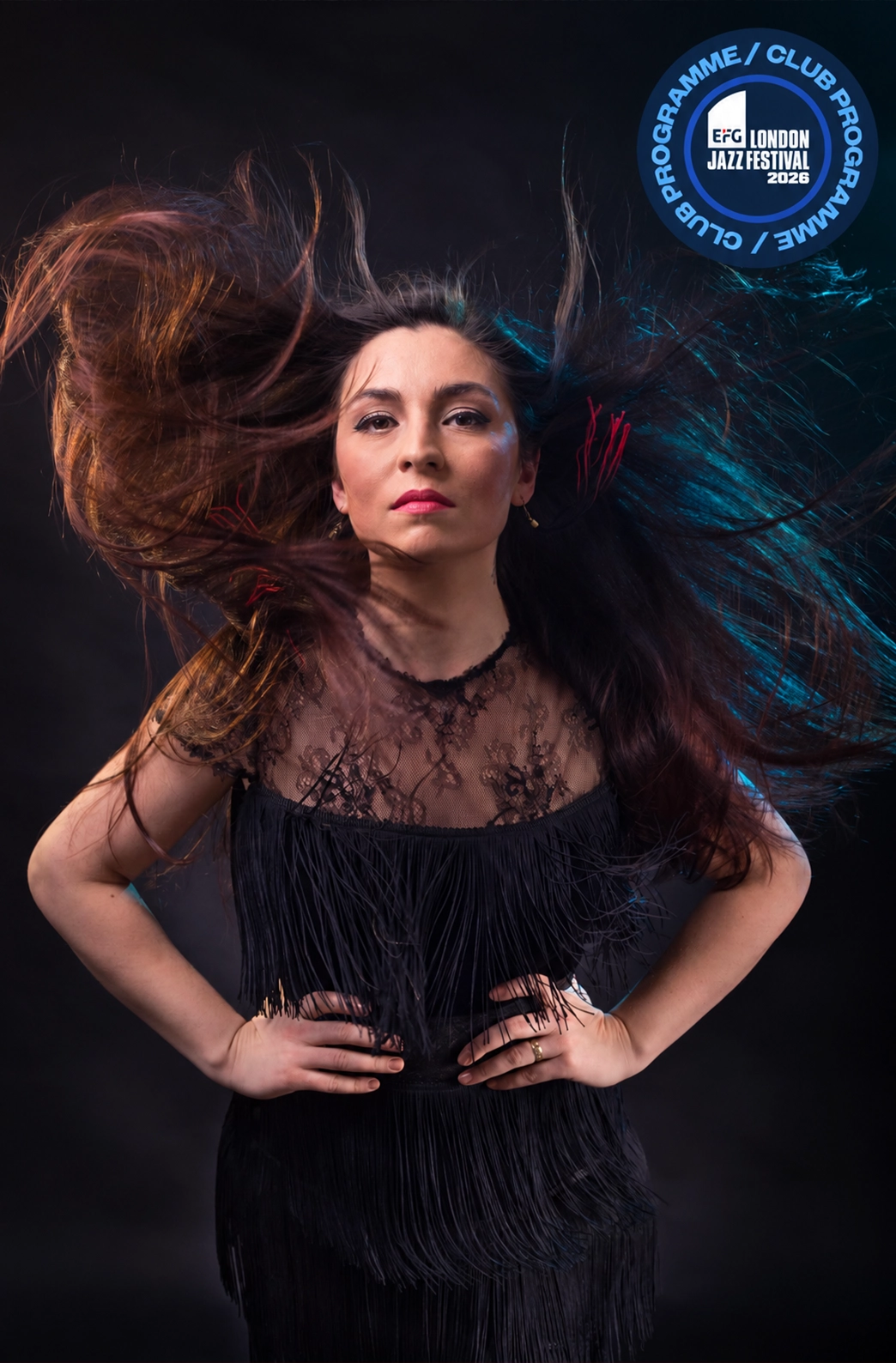
Luiza Zan on the EFG London Jazz Festival lineup

WIN Alliance: In a way, you’ve already answered the following question for me: what led Luzia Zan to choose this particularly sophisticated musical genre? And what appeals to you most: the production side, the actual performance, the songwriting and the creative process?

L.Z.: I really loved Nat King Cole’s music and, in fact, that’s what led me to jazz: Nat King Cole’s voice, which is deep, smooth and powerful all at once. I really wanted my voice to sound exactly like his, even though I knew I had no hope, no chance. But here I am, still singing his music. 

At every stage of my life, I go through one of these phases; right now, for example, I’m focused on the lyrics. Later on, perhaps I’ll be focused on performance. At the moment I’m concerned with versification – that is, the subject matter of a lyric set to a particular piece of music, breathing, cadences and improvisation – especially since, as we know, improvisation is a fundamental part of jazz.

luiza-zan-05 luiza-zan-05

Luiza Zan at the EFG London Jazz Festival alongside Muse Quartet, November 2026

WIN Alliance: We’ve spoken at length about jazz as a language of emotion. You speak nine foreign languages, Romanian being one of them. How does your ability to speak such a wide variety of languages influence your musical creativity?

L.Z.: I have a personal philosophy, and I try to bring up my children in this spirit: choose your words in such a way that they reflect your true thoughts as accurately as possible. Don’t cut your thoughts short just because you can’t find the right words. The freer you are to speak, the more creative you become in a language, I believe. It’s just like jazz: the freer you are to experiment, the more creative, lively and colourful it becomes.

I can say, for example, that in Hungarian, until this year, I didn’t have the courage to really speak. And now, out of the blue, I’ve started to pluck up the courage and speak Hungarian. I was actually asked an interesting question during an interview, and I remember it wasn’t on the list of questions, but one I had to ask myself in return, just as I’d been asked: ‘If you knew today was the last day of your life, what would be the thought with which you’d leave this world?’

I didn’t stop to think about it for very long when I was asked the question. In Hungarian – because that’s how I was asked – I replied immediately: ‘Remélem, lesz még tanulás ezután is.’ The translation would be: ‘I hope there is still learning to be had from here on.’ The fact that the answer came so quickly in Hungarian—that this reply sprang almost instantly from somewhere in my brain…—was something that surprised even me. I was delighted by this new ability and said: “Right, from this moment on I can say that I speak Hungarian as well.”

WIN Alliance: A career like Luiza Zan’s isn’t built on its own, overnight; it requires a great deal of tenacity and a close-knit team. Who is involved in this project and what goes on behind the scenes?

L.Z.: I’m not someone who readily shares moments or details of my personal life, so I won’t say much about what goes on behind the scenes. I’ll just say that, without my husband, my career wouldn’t have existed. We’re a team and we’re in this together in everything we do. He’s more than just the man who drives me to every concert; he’s more than just the man who looks after my instrument on stage. He sets up my microphone and takes it down; he’s my go-to technician for everything, and he manages the communication between me and certain collaborators. He makes sure to take a huge burden off my shoulders – that of communication – when the pressure gets too much, and he also takes care of all those little details involved in organising a concert, so that I can focus on the artistic and creative side of things.

luiza-zan-06.1 luiza-zan-06.1

Luiza Zan at the EFG London Jazz Festival, November 2026

WIN Alliance: You have recently returned from a remarkable musical journey to London, performing alongside Muse Quartet as part of the prestigious EFG London Jazz Festival. What made this experience particularly meaningful and what does it mean to you to represent Romania on some of the world's most distinguished stages?

L.Z.: It was an inspiring event, and, for a little while, we travelled not only between countries, but also beyond the boundaries of music. EFG London Jazz Festival brought Bucharest and London together through the universal language of jazz, and I was joined by the brilliant musicians of Muse Quartet: Alina Horez (violin), Nicoleta Petre (violin), Maria Colțatu (viola) and Alexandra Pascaru (cello). We proposed something fresh, original, with no conventional boundaries between soloist and accompaniment and no predictable musical paths. It was about voices and strings, improvisation and exuberance. We were delighted to welcome some very special guests among the audience: star soprano Ramona Zaharia, currently performing the title role in the Royal Ballet and Opera’s Carmen, and brilliant pianist Daniel Ciobanu, who took centre stage. And we couldn`t have attained this wonderful event if not for our trusted partners and sponsors, WIN Alliance and WIN Gallery. As pillars of cultural expression, WIN Alliance and WIN Gallery have been our supporters from the beginning, bringing these diverse and creative worlds together. 

WIN Alliance: What does beauty mean in jazz?

L.Z.: If it is true that a person’s beauty lies beneath their skin, then the beauty of jazz lies in the silence between the notes.

Interview by Ioana-Raluca Zamfir,
Visual artist and PhD. in cinema and mass-media